Categories
Business Finance News NYC Real Estate

A New York Story

Larry Silverstein has spent a lifetime shaping the New York City skyline. He isn’t done yet.

Photography by Andrew Matusik

“BUY CORNERS,” Larry Silverstein replies without hesitation when asked what the most important lesson is that his father Harry taught him about the real-estate business. “If you buy a corner, you have frontages on at least two streets, right? And if you get lucky enough to be able to buy a block front, that gives you even more possibility.” Trained as a classical pianist, Harry had struggled to provide for the family during the Great Depression, eventually becoming a commercial real-estate broker to make ends meet.

Curious about the business, Larry went to work for his dad after graduating from N.Y.U. in 1952. “Something that hit me very early on,” he recalls, “is that I wanted to own something. I wanted to be an owner.” Lacking cash for a down payment, the Silverstein father-son duo took a page from Harry Helmsley and Lawrence Wien’s playbook, scraping together a syndicate of investors to buy their first property, a shabby industrial loft building on East 23rd Street, in 1957. It may not have been a corner property, but they made it work by converting it to office space and leasing it out to white-collar firms. “It was sink or swim,” Larry says of their first venture. “Failure was not an option.”

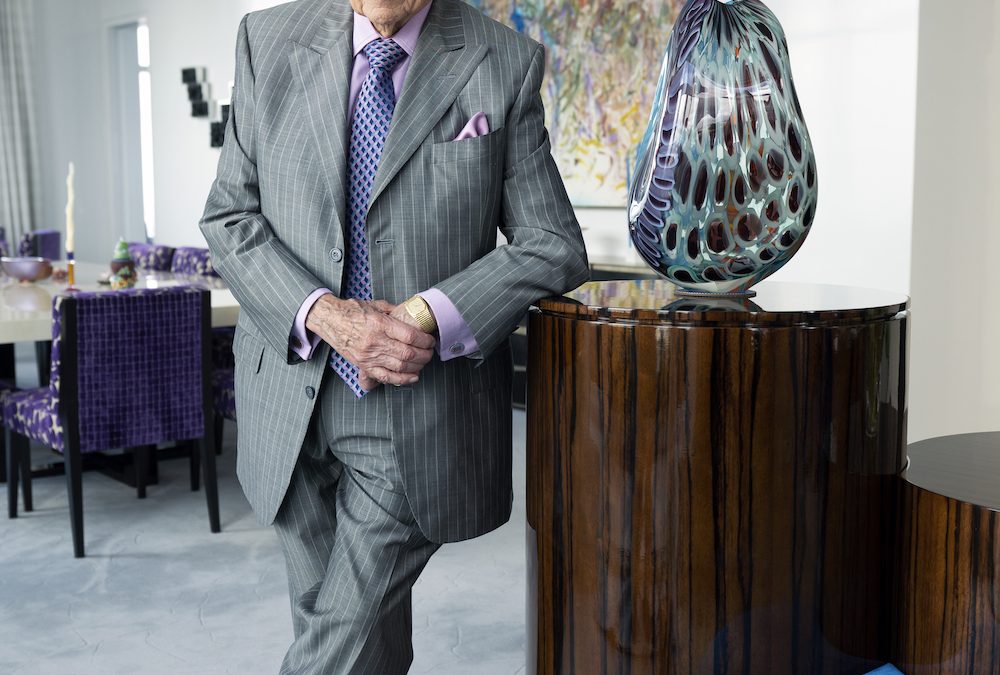
Silverstein, who turned 90 in May, still reports to the office almost every day, invariably dressed to the nines in a double-breasted suit with a colorful tie and matching pocket square, dispensing friendly salutations to everyone he passes along the way. But behind the elegance and old-school charm, the Brooklyn grit and street smarts remain. “It was not a very luxurious existence,” he recalls of his upbringing on the top floor of a six-story walkup in Bed-Stuy, “which wasn’t nearly as trendy of a place as it is today.”

THE REBUILDING

That Brooklyn grit would come in handy when it came to rebuilding the World Trade Center. When Silverstein acquired the Twin Towers in July 2001, he could never have imagined that within months they’d be gone—and he’d be stuck with a 99-year lease that obligated him to continue paying the Port Authority, which owns the site, $10 million a month in ground rent. The lease also stipulated that he rebuild all the office and retail space that had been destroyed on 9/11.

To make matters worse, quite a few of the two dozen companies that had insured the towers—to the tune of $3.5 billion—were refusing to pay Silverstein’s claims. It took five years of litigation and the intervention of New York governor Eliot Spitzer to finally move the needle. “I called him, and I said I can’t collect,” recalls Silverstein. “So, he brought them all to New York and told them, ‘The courts have found that these are your obligations, so if you don’t pay, you’re never gonna do business again in the state of New York.’” In May 2007, they finally agreed to pay Silverstein the $2 billion he was still owed, marking the single biggest insurance settlement in history. A tidy sum indeed, but still not nearly enough to fully rebuild the Trade Center.

Fumihiko Maki Larry Silverstein Norman Foster and Richard Rogers photo by Joe Woolhead
STARCHITECT LIFE: Prtizker-prize winning architects Fumihiko Maki, Lord Norman Foster, and Lord Richard Rogers, with Silverstein, in front of an architectural model of the World Trade Center campus. Maki designed 4 WTC, Foster’s 2 WTC is expected to begin soon, and Rogers designed 3 WTC. (Photo credit Joe Woolhead)

Despite the many professional battles, Silverstein says it was the “naysayers” who personally affected him the most. “The negative voices kept telling me I would never succeed,” he says. “No one will ever come down here. No one will ever rent space. Why are you wasting your time?” Yet he remained determined to rebuild. Not for personal gain—he stood to make little money from the effort and was already well beyond retirement age—but because otherwise would signal defeat. “If you don’t rebuild it, then the terrorists have won, right? I absolutely couldn’t let that happen.” When pressed if there was ever a point at which he doubted that rebuilding office towers adjacent hallowed ground was the right thing to do, his answer is immediate and unequivocal: “Never.”

“[Downtown is] young, it’s vibrant, it’s enormously exciting. Should add ten years to our lives.”

Larry Silverstein at opening of 3 WTC.
OPEN FOR BUSINESS: Silverstein at the opening of 3 World Trade Center in 2018, with CEO Marty Burger, President Tal Kerret, daughter Lisa, son Roger, and architect Richard Paul. Photograph by Joe Woolhead.


Roger, Lisa, Klara, Larry, and Lenny Boxer pose with the ceremonial keys to the World Trade Center on July 24, 2001.


NEW KID ON THE BLOCK

“When we bought the Twin Towers, this place was a ghost town,” Silverstein recalls. “After six o’clock, you could roll a bowling ball down Wall Street or any place you wanted.” But after watching the neighborhood evolve after 9/11—and after more than 30 years in the same Park Avenue apartment—Larry and his wife of 65 years, Klara, decided it was time for a change.

“Something that hit me very early on is that I wanted to own something. I wanted to be an owner.”

Larry Silvestein
Larry Silverstein poses with the children of some of Silverstein Properties’ employees during “Take our daughters and sons to work day ” in 2013.

So, in 2018 they moved into a penthouse at 30 Park Place, one of his developments. The 82-story tower, designed by Robert A. M. Stern to look as if it could have been built a century ago, opened in 2016 and includes residences atop a Four Seasons hotel. “If you look far enough,” Silverstein jokes about the view from his 80th-floor terrace, “you can see the curvature of the earth.”

“Two things really tipped the scale in favor of moving down here,” he explains. “Number one: my grandson said, ‘Poppy, if you move down here, I’ll show you how to go to work by skateboard every morning. It’s two blocks, downhill, piece of cake.’” Number two was
the rejuvenated neighborhood. “It’s young, it’s vibrant, it’s enormously exciting. Should add ten years to our lives.” Downtown’s residential population has more than tripled since 9/11, and according to Silverstein, the area now has the highest work-live ratio in the country: 27 percent.

That ratio will soon tilt even more residential. Last February, the Port Authority awarded Silverstein—in partnership with Brookfield Properties and two other firms—the rights to build 5 World Trade Center on the site where the plagued Deutsche Bank building once stood. The sleek 900-foot-tall tower, designed by Kohn Pedersen Fox, will feature more than 1,300 residential units, a quarter of which will be set aside for households earning less than 50 percent of the neighborhood’s median income.

While significant obstacles to groundbreaking remain, so does Silverstein’s trademark eternal optimism. Not only will the new tower be a model of energy efficiency and sustainability, he says, but “the firms that take office space at the new World Trade Center will be able to house their employees in the same campus if they want to, which is pretty damn unique, right?”

PRESERVING HISTORY

LOVE STORY: Larry and Klara Silverstein in the lobby of 4 World Trade Center.

Silverstein’s earliest memory of downtown is of the “extremely tall, very impressive buildings.” Little did he know he’d one day own one of them, 120 Broadway. Known as the Equitable Building, it became the biggest—if not the tallest— skyscraper in the world when it opened in 1915, occupying an entire city block between Cedar and Pine streets. It was so big that it spawned the city’s 1916 Zoning Resolution, which limited new construction to a percentage of lot size to ensure at least a modicum of sunlight could reach the surrounding canyons.

When Silverstein bought the landmarked building in 1980, many of its historic details had been neglected, if not concealed outright. “The previous owner had no feeling, no sensitivity to the importance of historic landmarks,” he recalls. “They hung acoustical drop ceilings without any kind of architectural detail at all. Added fluorescent lights and so forth. It was dreadful.” So, Silverstein immediately set about renovating it, carefully restoring such original details as the terra-cotta window frames and the lobby’s Tennessee-pink-marble floor, and vaulted, coffered ceiling with carved rosettes. “It makes such a difference,” he says. “Tenants appreciate what a detailed restoration can produce.”

ART & COMMERCE

Something tenants also appreciate, Silverstein says, is art. When he opened the original Seven World Trade Center, in 1987, he immediately realized he had a big problem on his hands. “I looked at the lobby, and I said to myself, I’ve gone crazy.” He explains that he had “fallen in love with” a particular carmen-red granite he’d personally selected from a Finnish quarry for the building’s façade.

But he didn’t stop there. “The entrance to the building? Carmen-red granite. The toilets? Carmen-red granite. The elevators? Carmen-red granite. Everything! Carmen-red granite. The place looked like a mausoleum.” He called Klara in a panic and asked her to come down and have a look for herself, hoping maybe she wouldn’t think it was all that bad. “One look around and she said, ‘You know what? Looks like a mausoleum.’”

They agreed the lobby could use some art to spruce it up, so they set about scouring the city for contemporary works large enough to adequately cover all that carmen-red granite. One of their first purchases was a fourteen-by- six-foot Roy Lichtenstein entablature. Works
by Frank Stella, Ross Bleckner, and Alexander Calder soon followed. “We ended up collecting a whole realm of first-class contemporary art,” he says. “That taught me something, that is art has a huge impact on people’s attitude towards buildings, a very positive attitude. It made an enormous difference.”

“We ended up collecting a whole realm of first-class contemporary art. Art has a huge impact on people’s attitudes towards buildings.”

Larry Silverstein at the piano.
AT HOME: Larry Silverstein at the piano.

Larry with his wife Klara, in their apartment atop the Robert A.M. Stern designed 30 Park Place.

“Whether I’m still around or not, the Trade Center will be done. And what we will have put back is vastly superior, not just in terms of quality or architectural design. The parks, the neighborhood-totally transformed.”

Art plays a bigger role than ever in and around the new World Trade Center campus. Not only are there remarkable lobby installations, like Jenny Holzer’s “For 7 World Trade” and Kozo Nishino’s “Sky Memory,” Silverstein even hired street artists Stickymonger, Ben Angotti, and BoogieRez to paint the corrugated metal walls that sheathe the base of what will eventually become 2 World Trade Center, now an entrance to the transit hub.

BACK TO WORK

“There’s been no shortage of naysayers all over again,” Silverstein replies when asked if he sees parallels between post-9/11 and post-pandemic downtown. “New York is done, finished. No one’s ever coming back. The office buildings are gonna be vacant. Fold up the tent and steal away into the night.” Not surprisingly, he’s as sanguine as he was after 9/11 about the potential for recovery after covid. “Will it be 100% back to the way it was? No, I don’t think so. But people will come back. Of course. It’s gonna happen. So much comes out of talking together around the water cooler.”

And what does he think downtown will look like in another 10 years? “Well, whether I’m still around or not, the Trade Center will
be done,” he says. “And what we will have put back is vastly superior, not just in terms of quality or architectural design. The parks, the neighborhood—totally transformed.”

“Buy corners” may have been the best professional lesson Harry Silverstein imparted to his son, but it’s this bit of wisdom that endures: “Whatever you do in your life, be truthful with people,” Harry told him. “And never equivocate.” Impeccable advice for an age where truth has become all too relative. DT

Categories
Dining Featured Indulgence

Cookie Dough as a Platform for Mental Health

Building a Brand with a Mission for Mental Health

Any entrepreneur should know the what, how, and why of what they’re selling — yet most times, the “why” is missing.

The businesses that stand out and succeed most often do so because they’re able to tap into the broader mission their specific product, service, or cause is supporting, and the “what” and “how” simply become the vehicle for an entrepreneur’s more significant impact.

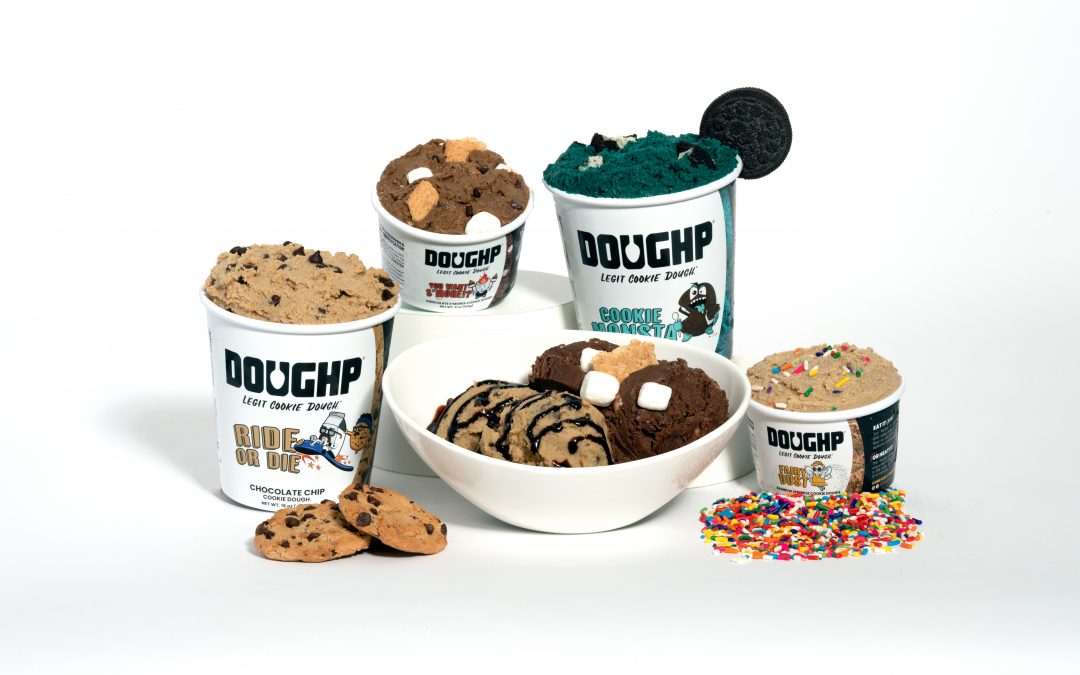
At Doughp, a cookie dough company founded by Kelsey Moreira in early sobriety, her “why” of selling cookie dough taps way beyond the indulgent taste of her sweet desserts, which with no eggs and heat-proof flour can be eaten raw or baked, and taps into crafting cookie dough as a platform for mental health and addiction recovery, which Moreira herself connects with.

“The story to Doughp begins in early sobriety, jumping back in the kitchen and baking nights and weekends,” Moreira recalls, adding that her free time spent baking was “really kind of a self-discovery moment to figure out who ‘Kelsey’ was and what she likes to do.” Coming off of the heels of a ten-year career in tech,

Moreira soon made the jump full-time to launching her own cookie dough company after receiving enough encouragement from friends, family, and colleagues who all enjoyed the treats she’d often gift them with.

Cookie Dough on the Ride to Recovery

Opening her first storefront on Pier 39 in San Francisco in 2017, Doughp initiated #Doughp4Hope that same year “to break the stigma around mental health and addiction recovery,” Moreira emphasizes.

The company quickly launched into the big-time as Moreira was soon featured on a hit reality television series Shark Tank and recognized as an honoree of Forbes 30 Under 30. Yet with Doughp’s growth topping the charts at 219% each year, the same mission has carried through to make a difference. “This is so much more than cookie dough to me.

In fact, I would say we’re not a cookie dough company — we’re trying to give people a chance to make an impact around issues that matter to them, with mental health and recovery at the forefront. That’s really what we’re selling: the chance to make an impact,” Moreira underscores.

In 2021, Doughp partnered with, SHE RECOVERS Foundation to provide 1% of all sales to support the non-profit’s initiatives. As Moreira explains, “they also support mental health challenges, life challenges, substance abuse disorders, eating disorders,” mentioning that SHE RECOVERS takes care to acknowledge that “we’re all in recovery from something.

I certainly really aligned with their philosophy and I’m proud to be a partner of theirs.”

Looking ahead, Moreira sees expanding the company to crafting cookie dough as a platform for mental health while including a broader palette of indulgent desserts, with expansion still geared towards raising awareness for mental health and addiction recovery.

“Looking at Doughp as just a cookie dough company would be short-sighted, so I really see evolving the business into a food platform for mental health and addiction recovery,” she adds. 

To order Doughp cookie dough and support their mission, visit doughp.com. 

Categories
Beauty Business Featured Health

Downtown Q&A: Celine Kaplan and Amy Focazio

Meet the fierce duo taking the NYC public relations world by storm. Celine Kaplan is a PR pioneer and founder of her own luxury boutique agency, CKPR. By her side is her managing partner, Amy Focazio; a maven in her own right. Focazio has over 20 years of public relations experience, 16 years at Estee Lauder, and 12 at M.A.C. Cosmetics.

CKPR has had to evolve with the times, modernizing and rebranding to better suit today’s climate. For instance, they partner with influencers, an important facet of the public relations world. The agency’s current clients include Ladurée, Orveda, Clinique La Prairie, and Le Bon Marche Rive Gauche, to name a few (no biggie). 

These two close friends and business partners might have different approaches to business. However, get a glimpse of their synergy, and you might find that these two great minds think alike.

Meet Celine

Downtown: What brought you to the US?
Celine Kaplan: As A French woman – it was a love story of course… then I fell in love with NY…

DT: How did you get started in your industry?
CK: I started in the art world arriving in NY — then realized I needed to pay bills and worked at AIR FRANCE for the Terminal One project in public relations- that is when I realized the power of the press.

My passion was beauty and fashion so I was able to start working for Bourjois and Eres (part of the Chanel Company Limited). [This] lead me to open my own boutique agency with Eres, Laduree, and The Webster…to name a few.

DT: What is the most difficult thing to accomplish in public relations when you have a new client?
CK: TRUST. PR is a long-term investment and clients need to know that you will absolutely do what is right for the brand but it takes time… Even if it is saying NO to certain opportunities.

DT: Do you find it more difficult to get products covered in print than online?
CK: Print for sure… the print publications have a limited amount of pages, that’s all.

DT: Do most brands prefer online advertising?
CK: Brands LOVE both and always want it all. Our clients are luxury so print is still major.

DT: What industry is most prominent for the brands that you work with at your agency?
CK: At the moment, beauty and lifestyle. Fashion post-COVID has been more challenging.

DT: What is it like to work with a partner? Furthermore, what strength differentiates you from your partner, and vice versa?
CK: It’s the best tool and weapon…to ideate, to share, to negotiate… Amy and I have been friends for over 20 years. We have the same taste and understanding for luxury but very different strengths.

Amy is Type A so everything needs to be perfect. She comes from a corporate background and is methodical, strategic, laser-focused on the details, a natural leader…. and she has a wicked sense of humor! I will let her answer about my strengths.

DT: What do you look for in new clients?
CK: I always say if I already bought your product I can do a good job… I guess it’s called Sex appeal.

DT: Who inspires you most?
CK: Women in general – collectively… wives, mothers, lovers, businesswomen all at once. It’s impressive.

DT: What do you hope to achieve by this interview with Downtown Magazine?
CK: World fame and recognition… kidding. New business leads would be great of course.

DT: What is your favorite place in Lower Manhattan?
CK: Laduree, The RealReal, Bode, the Frankie Shop, The Brant Foundation, The Swiss Institute, The Whitney… not in that order.

DT: Where do you go to relax in NYC? Downtown?
CK: Well, I am lucky enough to have one of my close friends who is a chef founder, and owner of Left Bank and rotisserie chicken Poulet Sans Tete in the West Village… and it is my home away from home.

Biking, running, walking near the Hudson is always calming and relaxing. [As for] Uptown, I love The Mandarin Hotel spa and The MET.

Photo by Stephane Baunach

Meet Amy

Downtown: How did you get started in your industry?
Amy Focazio: I have always loved fashion and beauty. When I was 13 I had a pipedream and wanted to be a model…. I’m 5’4 mind you. Let’s just say that didn’t work out! Right out of college my sister kicked off her career in Fashion Public Relations. As soon as I was handed my diploma I beelined it for NYC and interned at her PR agency. The rest is history.

DT: Where did you go to university?
AF: Ithaca college. I grew up in New Canaan and love nature. Ithaca is beautiful, but the winters are brutal.

DT: What is the most difficult thing to accomplish in public relations when you have a new client?
AF: We have launched a lot of new brands and it takes time to build awareness. Managing expectations is the first thing that comes to mind, but when the brand finally takes off there’s nothing more satisfying for us. It’s the best feeling. Also, PR really needs to be a long-term relationship, not a one-off.

DT: Do you find it more difficult to get products covered in print than online?
AF: Yes, but having longstanding relationships with the press certainly helps.

DT: Do most brands prefer online?
AF: That would be a yes. For luxury brands, seeing their product in the glossy pages of a magazine is still important.

DT: What industry is most prominent for the brands that you work with at your agency?
AF: So many… Beauty, Fashion, Home, Hospitality, Travel.

DT: What is it like to work with a partner? Furthermore, what strength differentiates you from your partner, and vice versa?
AF: Celine and I are polar opposites. Her head is in the sky. She’s very creative and impulsive, imaginative, a master networker. Organization is not her strength but it all gets done… Her sense of humor is through the roof. We laugh all day long.

DT: What do you look for in new clients?
AF: Celine and I share the same philosophy…. We have to love the brand, [and] want to buy it. We can’t promote a brand to the press and consumers if we don’t believe in it. It’s also important that they are cognizant [of] the issues we face today. It’s important to consumers that brands are responsible.

DT: Who inspires you most?
AF: People that are not afraid to speak out about important issues. Who use their voice for the greater good. It’s beyond inspiring.

DT: What do hope to achieve by this interview with Downtown Magazine?
AF: Fame, fortune, and glory…. All joking aside, I love Downtown Magazine and I’m excited that we’re doing this. Of course, new business opportunities would be great.

DT: What is your favorite place in Lower Manhattan?
AF: Of course Ladurée. I’m a vegetarian and the vegan eggs and croissants are to die for. My husband is French and Lucien always makes him happy. The Warm Store in Nolita and New Museum is always a go-to for me.

DT: Where do you go to relax in NYC? Downtown?
AF: I lived in Tribeca for a long time and my sanctuary was going to the Hudson River. I love to be near water… it’s calming. As Celine and I have been friends for 20 years we share a lot of the same friends. Our friend who is the owner and chef of Left Bank restaurant in the West Village is like family. We go regularly … it has a great vibe. ★

For more Downtown Q&A, click here.

Categories
Dining Entertainment NYC

Food Truck Operators See Booming Business Amidst Citywide Closures


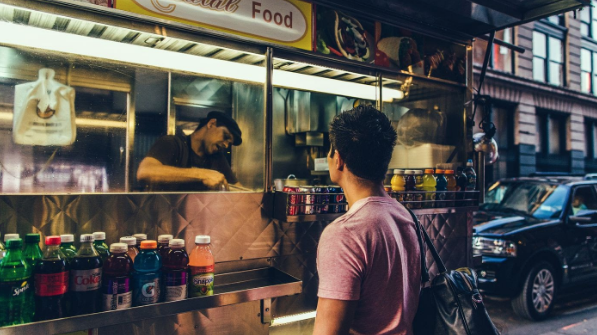
With city ordinances making it hard for consumers to visit indoor bars and restaurants, many people thought that the Big Apple’s world-famous culinary scene was dead. Mayor de Blasio’s policies have had an unforeseen side-effect, however. Since consumers haven’t been able to eat in their favorite dining rooms, they’ve been visiting food trucks in droves.

A proposed New York City tax law could tip the scales even more in the favor of food truck operators. All goods delivered to your door could be slammed with a convenience tax of 3 percent. Consumers who are accustomed to ordering out for delivery might soon start walking to the truck on the corner instead.

Small businesses are already prepared for the rush.

Revamping a Food Truck to Deal with Demand

Due in no small part to the pandemic and New York’s already onerous health code, an overwhelming majority of food truck upgrades have been related to cleanliness. Plastic partitions that divide patrons and servers have become commonplace throughout the city and contactless payments have become all but mandatory in many cases. The national coin shortage hasn’t exactly helped, either. Fortunately, small business owners have found that investing in an affordable food truck point of sale system has helped to take much of the guesswork out of making these needed upgrades.

Once they have a new digital POS up and running, they’re free to accept credit and debit cards as well as more esoteric forms of payment. Few people would have ever thought that consumers would have wanted to pay for their food with cryptocurrency tokens, but a growing percentage of diners actually do. Payment processors have made it easy to sign up for these services by offering subscription plans based on a small flat fee. This has proven affordable even to food truck operators who’ve been dealing with supply problems and rising costs.

One thing they haven’t run into, however, is decreased demand. In some cases, people have started to eat more frequently at food trucks than they ever have before. World events have once more played into this saga, but not in the way you might think.

Feeding Protesters & Donors

When protesters took to the streets of New York, some cagey food truck operators found a way to make a quick buck. Culinary activists from the Bronx learned that protesters have to eat just like anyone else, and they were able to make enough money that they could support several local charities. One of these charitable groups actually refurbished old postal vans into food trucks, which were then used to distribute food to those in need.

In turn, this created a growing trend of food truck-based fundraisers where donors are able to get something to eat while they support a good cause. Though menus might look a little more sparse than they did in previous years, it seems like many people don’t really care. They’re more than happy to find a place still selling hot meals in the midst of a shutdown.

You may remember when white asparagus became something of a fad in the Manhattan area. Food truck operators often can’t get these kinds of exotic ingredients any longer.

In spite of that, short-order cooks have found new ways to jazz up old favorites. Countless varieties of hot dogs have been invented in the last few months and new recipes are coming into existence all the time.

Many of these will probably stay on food truck menus even after indoor restaurants return to full capacity.

The Future of New York’s Food Trucks

Obviously, customers who are only patronizing food trucks because their favorite restaurants aren’t open may gravitate toward other businesses in the future. Some of them will probably keep visiting their new favorite mobile eateries, however, and that bodes well for the food truck industry as a whole.

If people don’t feel comfortable returning to indoor dining areas, then the future might even be brighter for food truck operators. Seasonal vendor licenses are available for those who want to run a temporary mobile restaurant from April 1 through October 31 of each year. It’s likely that many entrepreneurs are likely to apply for this kind of a permit to test the waters next year and see how many of their new clients stick around.

Others may try to start serving local favorites as soon as businesses start to open up. Judging by an interview with a local chef, there’s still quite a large demand for classic New York-style bagels and bialys. Truck operators who aren’t currently able to get enough AP flour and kosher onions to make baked goods like these will be certain to sell them in droves once they’re able to put them back on their menus.

No matter what next year’s economic outlook is like, food truck operators should still be a common sight in all five boroughs.

Categories
Business Finance NYC

5 Things That Make Doing Business in NYC Unique


Being a center of business and development, New York City is recognized as a huge contributor to the growth of the US economy.


Entrepreneur lists NYC as one of the ten best cities to open a business for good reason— here’s why the Big Apple is still a major hub for startups today:


It’s a melting pot of cultures


NYC remains to be one of the most diverse cities in the US. If you believe in the impact of diversity in business, there’s no better place in the country to start your new venture. WE Forum shows that diversity does pay, with inclusive workplaces outperforming those without a mix of innovative ideas and cultural talent.


There’s a large pool of creative and tech talent


NYC has attracted a great number of talent, especially those in the creative and technology sectors. In 2017, NYC employed some 300,000 creatives and 130,000 tech professionals. Successful businesses are often founded on the talent and expertise of the people behind them, so anyone looking to achieve success with a skilled team will do well in the city.


It’s full of venture capitalists


There are more opportunities for external funding in the city. For entrepreneurs planning on opening a business in NYC, you’re in luck, as it is one of the top areas along with Silicon Valley when it comes to venture capital funding. As these investors fund businesses with potential for growth, be ready for the pitch of your lifetime.


The entrepreneurial network is vibrant and supportive


The state of New York has very supportive policies for new businesses. Entrepreneurs looking to start a limited liability company in New York can gain business training, assistance, and resources, as well as tax credits through the Employee Training Incentive Program.

Innovation is also a key focus, and NYC businesses are encouraged to collaborate with local universities for knowledge and technological resources. Industry experts also offer support through mentorship programs for business owners. 

An example of this is Oceans, a group of former big tech company employees who mentor new businesses on digital solutions to jumpstart their companies. Groups like these form a very stable foundation for the success of businesses in the city.

With its lively culture and the tremendous amount of support from government and private communities, it undeniably rings true that New York City is one great place for anyone who dreams of starting a business.

Categories
Business Dining Featured Restaurants Travel

The Flavor of Adapting in a Strange Age: The Original Hotdog Factory

Around the corner from the Liberty Bell, The Bourse Food Hall is adapting to COVID-19. The 130-year-old commodities-exchange-turned-food-hall, well known as a gathering for good food and good variety, has removed their chairs from indoor tables. If you want to sit and eat, there are tables set up outside. The lines are marked with social distancing diamonds that read “STAND ON THIS JAWN” (jawn is Philadelphian for “thingamajig”). 

Last week, The Bourse is welcomed a new vendor: The Original Hotdog Factory. Any other time, this might be routine. The Original Hotdog Factory franchise specializes in a wide variety of hotdogs alongside wings, fried Oreos, and other delicious goodies. During COVID, though, opening any new food location is an aberration. But for franchise owner Aaron Anderson this is nothing new.

Anderson is quiet and friendly. For a man with a dozen successful businesses, including 5 Original Hotdog Factory locations in Philadelphia, he carries himself like a mom and pop shop owner–a modest smile, quiet voice, and focused attention. But he dreams big, including owning a sports team (his first choice is the Philadelphia 76ers) and running for office in Philadelphia.

This is the second Original Hotdog Factory that he has opened since COVID hit Philly. 

Technically, it’s his third. 

Anderson opened his fourth location in February of 2020, right before COVID. The location focused on indoor seating, and the sudden desertion of foot traffic drove it to extinction in weeks. So Anderson turned around and reopened in a new location in March. This time, he focused on takeout. He reached out to first responders and offered meals and services with organizations like the Ronald McDonald House. And the store thrived.

If other companies want to survive, he says, they’ll have to adapt. “Pivot in everything that you know. You’ve just got to change it…Stay focused no matter what. Times are definitely tough, but if you stay strong and sustain (then) on the other side is success for sure.” It is also, he says, about who has your back, including yourself. “It’s just being self-motivated and having a strong support team that keeps you motivated, and that’s always got your back.”

The next time you’re in Philadelphia, you can stop by The Original Hotdog Factory in the Bourse Food Hall, now open for business. Top options to check out at the Bourse location include the Surf n Turf (beef hotdog with crab meat), Fire Dog (loaded with peppers), and a damn fine Coney Dog. You’ll have to leave the Hall to eat them, but it will be worth the extra steps when you order the deep-fried twinkie for dessert.