The Warsaw Ghetto Uprising, where 13,000 Jews died fighting Nazi oppression –
in April and May 1943, it was the largest single act of resistance during the Holocaust. The Uprising was the inspiration for “Zog nit keyn mol” (Yiddish: “Never Say”), known as the “Partisan Song.”
WeAreHere-IG-Timezones
The song, which exemplifies Jewish resistance to Nazi persecution, is inspiring a special virtual event this Sunday, June 14 –
“We Are Here: A Celebration of Resilience, Resistance, and Hope.” The concert – which will be live-streamed at www.wearehere.live – commemorates the 75th anniversary of the end of World War II and the 77th anniversary of the Warsaw Ghetto Uprising, even as it speaks to the challenges of the current moment.
“We are all inspired by the example set in the Warsaw Ghetto Uprising. The Partisan Song, which begins and ends this program, speaks to the fight for social justice and fundamental human rights,” said Bruce Ratner, Chairman of the Board at the Museum of Jewish Heritage – A Living Memorial to the Holocaust.
And they’ve enlisted a robust array of renowned actors, musicians, and civic leaders to participate. Among them is a four-time Grammy Award and National Medal of Arts-winner, star soprano Renée Fleming, who will perform the world premiere of a new work by Pulitzer Prize-winning composer John Corigliano based on a text by Kitty O’Meara.
Among the others participating are EGOT-winner Whoopi Goldberg –
Grammy Hall of Famer and Tony-winner Billy Joel, world-renowned pianist Lang Lang; the iconic Dr. Ruth Westheimer, Emmy- and Tony-nominated actress Lauren Ambrose, multi-platinum, Tony-winning Broadway star Lea Salonga, multi-Grammy-winning opera star Joyce DiDonato, and award-winning actress Mayim Bialik.
“Both the recent COVID-19 pandemic and the centuries-old pandemics of racism and antisemitism highlight the need for resistance and resilience,” Sing for Hope Co-Founder Camille Zamora said. Added Sing for Hope Co-Founder Monica Yunus, “As we seek to listen, learn from, and serve our communities in the days ahead, thoughtful organizational partnerships will be key. It is an honor to unite artists and stand together as allies with a global network that fosters resilience, resistance, and hope.”
National Yiddish Theatre Artistic Director Zalmen Mlotek –
and Executive Director Dominick Balletta noted that “In this time of rising antisemitism and global crisis, the themes of resistance, resilience, and hope are more important than ever, and the Partisan Song takes on even more resonance. The song begins with the words ‘Never say this is the final road for you,’ and ends with the words ‘We Are Here.’ It is the song that binds together those who fight for justice.”
The program also will feature an interview by The Forward Editor-in-Chief Jodi Rudoren with Nancy Spielberg, Roberta Grossman, and Sam Kassow about their film Who Will Write Our History, which chronicles the story of Oneg Shabbat, the group that daringly preserved the history of the Warsaw Ghetto.
You can view the list of all participants here. Local viewing times include 11 AM Pacific Time, 2 PM Eastern Time, 7 PM London, and 9 PM Israel.
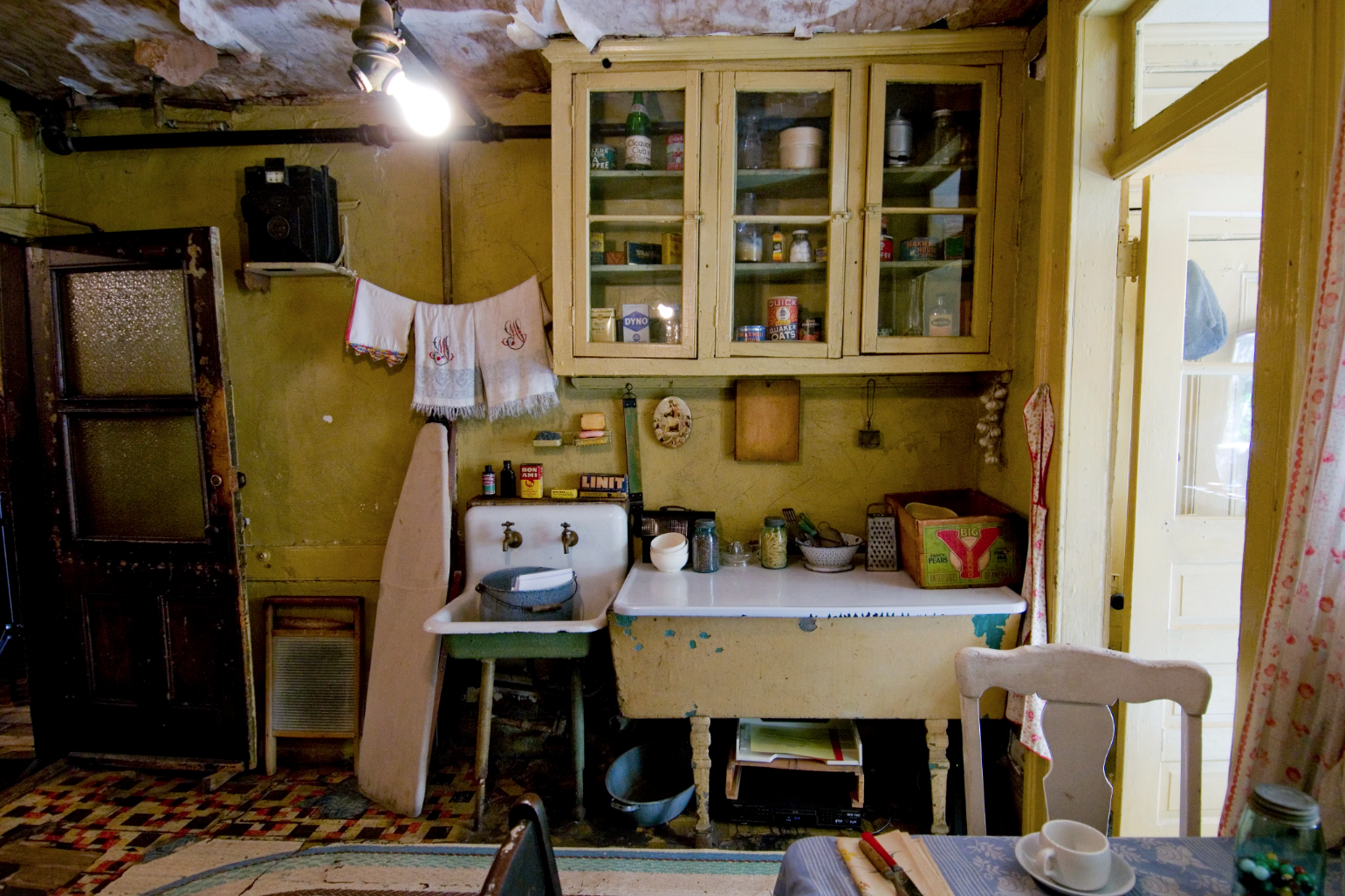
The Lower East Side is in danger of losing a very important piece of history. The Tenement Museum has called for some financial assistance during the COVID-19 crisis.
The Tenement Museum tells the true stories of American immigrant families through recreated apartments in a historic tenement building. The museum offers neighborhood walking tours, evening programs, free English language classes, and programs for school groups.
The Tenement Museum’s mission is to “foster a society that embraces and values the role of immigration in the evolving American identity.” They accomplish this through guided tours; curriculum and programs for secondary and post-secondary educators; stories, primary sources and media shared on our website; and interactive online experiences such as Your Story, Our Story, podcasts and more.
Due to the crisis, the museum has had to close; forgoing their normal earned revenue, as well having to cancel its fundraising gala. The museum’s dedication to keeping the experience and the story of the LES immigrants’ experiences alive is unparalleled. Just like the immigrants who made their homes at 97 and 103 Orchard Street, New Yorkers are experiencing a pandemic and financial crisis of our own time, and it is important to remember how our ancestors prevailed.
“We are living through the stuff of history. It’s all the more important, therefore, that our response fits this moment,” says President Morris J. Vogel in a statement.
Please consider making a gift that will allow the Tenement Museum to survive these unprecedented times, remain strong, and reopen when circumstances allow.
Corporate sponsorships are also welcomed. Corporate Members are entitled to free admission for employees and their guests, merchandise discounts, early access to Museum events, and recognition on the Museum’s website and in its Visitor Center. The Museum can also tailor packages to meet other corporate philanthropic and marketing goals.
If humans had to make every decision from scratch, nothing would get done. So our brains take shortcuts–they build models based on past experience to help us make important decisions and impressions as fast as possible: tigers bad, fire hurts, Philadelphia Eagles choke. The problem is that, when our brains decide that they have enough information, they become reluctant to update the model. Worse than that, we stop seeing our model as a model; it is easier to treat it as fact.
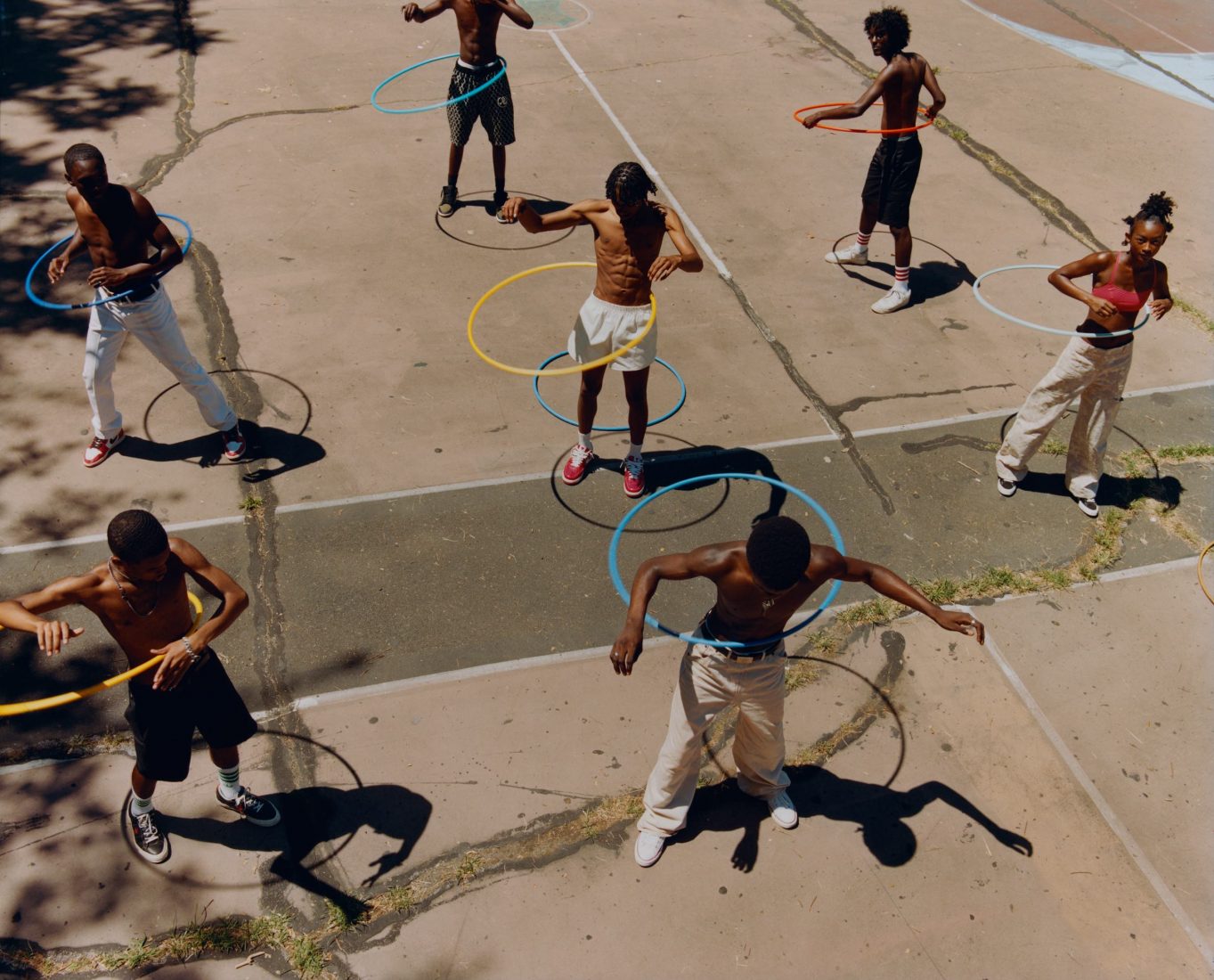
Photographer Tyler Mitchell was fascinated by images of recreation, especially on blogging and social media sites like Tumblr. A young black man from Atlanta, he was acutely aware that the children and teens in the images, especially the boys, were all white. Very few reflected Mitchell’s life and experiences. It wasn’t a problem unique to Tumblr. There is very little media anywhere that portrays black boys in innocent play. More often, black boys are portrayed as younger black men, and black men are portrayed as criminals. Mitchell set out to change that.
The 24-year-old says that his newest exhibition, “I Can Make You Feel Good” at the International Center of Photography, is utopian. It shows photos and videos of black children and teens, especially boys, playing and relaxing outdoors. Its utopian nature comes from the fact that black children are so often unable to relax and play freely. Mitchell’s exhibition opens with three screens showing projected videos of teens. The screens are an outward-facing triangle in a room of blank walls and a single mirror, so there are no distractions. As you watch, voiceovers of young teens explore personal anecdotes of bias and prejudice. One girl recounts an incident where a store employee followed her around an arms-length away as she shopped. A boy vents frustration at how his proud Nigerian family and heritage is ignored and discarded by those who see him only as another African-American. Another girl describes the exhausting effort she had to make to manage expectations and assumptions made about her by others based on her skin tone, specifically, in this story, the parents of a white friend.
All the while, you watch videos of black kids sitting, posing, or laying in a relaxed heap on a picnic blanket enjoying the outdoors. But this–for me at least–was just a primer. If you walk through another room full of stills of children and families, and you find yourself in a likeness of a suburban backyard: fake green grass beneath your feet and a white picket fence along the walls. Beanbag lounging beds stretch across the fake grass, inviting visitors to lie down and look up at another projector screen above their heads, with soothing, lively music playing in the background.
From “I Can Make You Feel Good” by Tyler Mitchell
This was where I had my ah-ha moment. This was where the exhibition struck home for me. I laid on that beanbag watching footage of black boys playing–riding bikes, swinging on swings, playing touch football–and I let the voices that I had heard earlier run through my mind. After a minute or so, I became aware of that assumption model working in my head, picking out flashes of recognition and sorting them according to experiences, stories, and media from some time in my past. Did that boy have the same haircut as a young gang member from the tv show The Wire? Did one of the boys on the bike look like a picture that I had once seen on the news of a bike thief? Human brains love to take images and make stories, and I became painfully aware of the tools which my subconscious wanted to use to build that story. I thought back to the boy frustrated that people refused to see his proud family narrative; the girl trying to make sure that her white friend’s mom didn’t think of her as one of “those” black girls; of the other girl who likely now, if she didn’t before, spends all of her energy while shopping figuring out how to act to preemptively prove that she wasn’t there to steal anything. I spent 20 minutes watching shots of a young boy’s ice cream dripping onto a camera. Watching groups of boys on swings and playing tag. And I forced myself to peel back all of the layers of assumptions which I, a 28-year-old white man who considers himself to be pretty progressive, had painted onto silent stock footage of boys enjoying the outdoors.
What Mitchell’s “I Can Make You Feel Good” has done, at least for me, is to remind me that the model exists and that the inputs are not–and never can be–so accurate that we can forget to update and reflect on it from time to time. And maybe we can approach a utopian time when everyone can look at children playing, shopping, or riding bicycles, and see nothing more than that.
When visiting the USA, finding the perfect location is something that can take time, but with a number of amazing locations in New York City, you will want to grab your ESTA and hop on the next flight to the states. In this article, we will be giving you a list of 6 unusual places for you to visit when spending time in this beautiful city.
The Mmuesumm
If you are looking for someone weird and unusual to the city then the Mmuesumm is by far one of the strangest. With the aim of telling a story about the modern world, the Mmuesumm is the perfect representation of modern journalism that evokes thought and is great for all the family. This interesting location is free to visit and has a number of different objects on show at any one time making it perfect for those that want to steer clear of the regular tourist traps.
The Highline
Another way for you to escape the city is to go above it and visiting the Highline is the perfect way to do exactly that. A public space located on the last remaining piece of freight line in Manhattan, this stunning public space is the perfect way for you to escape the noise of the city below whilst enjoying the very best of the music design and art.
Photo by Iwan Baan
Hess’ Triangle
The story behind this unusual triangle is one that dates back to 1928 when the Hess estate was pulled down to strengthen the road network and build the subway, however, he was not letting it go so easily. All that remains of this estate that is not public property is a 27 ½ inch triangle to with mosaic title claiming that the Hess estate was never dedicated for public purposes. This is now located outside a cigar shop off of seventh avenue and Christopher street if you want to take a look.
The Dream House
Another unusual location for you to visit in New York City is the dream house. Located off Church Street in TriBeCa this art installation located in a third-floor apartment building. This is a series of rooms filled with neon lights giving you the perfect escape from gyms and specialist restaurants. This is the perfect place to visit for those that love photography as the lights make for the perfect backdrop regardless of the time of day that you choose to visit.
Photo: John Cliett
The Elevated Acre
Much like the Highline, the elevated acre is the perfect location for those looking to enjoy a garden space without the noise of the city. Located high above the hustle and bustle, you can enjoy a number of food carts as well as some greener areas, to give you the perfect space to relax and unwind. Whether you venture here to watch the sunset, or you want to look at the moon, the elevated acre is perfect for you and your family.
The final unusual location for you to visit is the grave of the great escape artist Houdini. This grand escape artist was buried in queens following his death in 1926 from a ruptured appendix. This grand escape artist was beloved by millions around the world and drew in crowds with his amazing escape acts, however his death remains somewhat of a mystery. Some say it was a punch from a McGill university student whilst others fay it was poison from spiritualists that cause the rapture. However, this grand grave is well worth visiting should you find the time.
Whether you are traveling to New York in the summer or you are making your way to the city in time for Christmas, you can find a number of weird and wonderful locations for you to visit regardless of who you are traveling with.
Next week, the Museum of Jewish Heritage – A Living Memorial to the Holocaust will open the most comprehensive Holocaust exhibition about Auschwitz ever exhibited in North America. Auschwitz. Not long ago. Not far away. is produced in partnership with the international exhibition firm Musealia and the Auschwitz-Birkenau State Museum in Poland. The groundbreaking exhibition has been curated by an international team of experts led by historian Dr. Robert Jan van Pelt. It runs through January 3, 2020 in New York City.
For the first time, 74 years after the liberation of Auschwitz, a traveling exhibition dedicated to the historical significance of the camp is being presented to a U.S. audience. The exhibition’s May 8 opening marks the anniversary of VE Day or Victory in Europe Day, 1945, when the Allies celebrated Nazi Germany’s surrender of its armed forces and the end of World War II in Europe.
Auschwitz. Not long ago. Not far away.arrives in New York City after the exhibition completed a successful run at Madrid’s Arte Canal Exhibition Centre, where it was extended two times, drew more than 600,000 visitors, and was one of the most visited exhibitions in Europe last year. The exhibition explores the dual identity of the camp as a physical location—the largest documented mass murder site in human history—and as a symbol of the borderless manifestation of hatred and human barbarity.
AUSCHWITZ EXPOSICIÓN DE MADRID
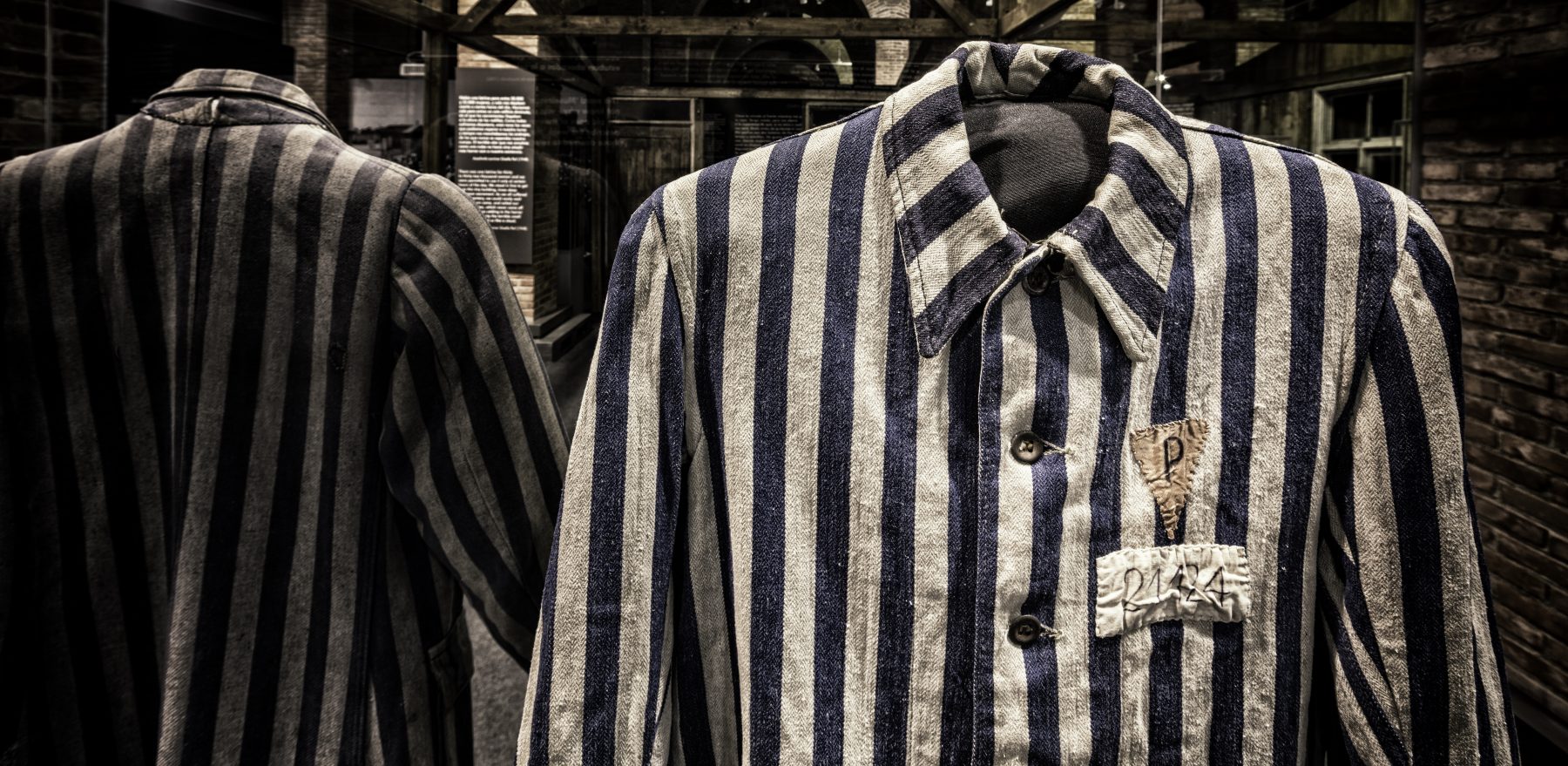
Featuring more than 700 original objects and 400 photographs, mainly from the Auschwitz-Birkenau State Museum, the New York presentation of the exhibition allows visitors to experience artifacts from more than 20 international museums and institutions on view for the first time in the North America, including hundreds of personal items—such as suitcases, eyeglasses, and shoes—that belonged to survivors and victims of Auschwitz. Other artifacts include: concrete posts that were part of the fence of the Auschwitz camp; part of an original barrack for prisoners from the Auschwitz III-Monowitz camp; a desk and other possessions of the first and the longest serving Auschwitz commandant Rudolf Höss; a gas mask used by the SS; Picasso’sLithograph of Prisoner; and an original German-made Model 2 freight wagon used for the deportation of Jews to the ghettos and extermination camps in occupied Poland.
Museum of Jewish Heritage Board Vice Chairman George Klein visited the exhibition in Spain and recommended to his Board that they bring it to Lower Manhattan. The exhibition features artifacts and materials—never before seen in North America—on loan from more than 20 institutions and private collections around the world. In addition to the Auschwitz-Birkenau State Museum and the Museum of Jewish Heritage – A Living Memorial to the Holocaust, participating institutions include Yad Vashem in Jerusalem, Anne Frank House in Amsterdam, United States Holocaust Memorial Museum in Washington, Auschwitz Jewish Center in Oświęcim, the Memorial and Museum Sachsenhausen in Oranienburg, and the Wiener Library for the Study of the Holocaust and Genocide in London.
Auschwitz. Not long ago. Not far away. traces the development of Nazi ideology and tells the transformation of Auschwitz from an ordinary Polish town known as Oświęcim to the most significant Nazi site of the Holocaust—at which around 1 million Jews, and tens of thousands of others, were murdered. Victims included Polish political prisoners, Sinti and Roma, Soviet prisoners of war, Jehovah’s Witnesses, and those the Nazis deemed “homosexual,” “disabled,” “criminal,” “inferior,” or adversarial in countless other ways. In addition, the exhibition contains artifacts that depict the world of the perpetrators—SS men who created and operated the largest of the German Nazi concentration and extermination camps.
The Museum of Jewish Heritage has incorporated into the exhibition more than 100 rare artifacts from its collection that relay the experience of survivors and liberators who found refuge in the greater New York area. These artifacts include: Alfred Kantor’s sketchbook and portfolio that contain over 150 original paintings and drawings from Theresienstadt, Auschwitz, and Schwarzheide; the trumpet that musician Louis Bannet (acclaimed as “the Dutch Louis Armstrong”) credits for saving his life while he was imprisoned in Auschwitz; visas issued by Chiune Sugihara, a Japanese diplomat in Lithuania often referred to as “Japan’s Oskar Schindler”; prisoner registration forms and identification cards; personal correspondence; tickets for passage on the St. Louis; and a rescued Torah scroll from the Bornplatz Synagogue in Hamburg.
Also on display from the Museum of Jewish Heritage collection will be Heinrich Himmler’s SS dagger and helmet and his annotated copy of Hitler’s Mein Kampf, as well as ananti-Jewish proclamation issued in 1551 by Ferdinand I that was given to Hermann Göring by German security chief Reinhard Heydrich on the occasion of Göring’s birthday. The proclamation required Jews to identify themselves with a “yellow ring” on their clothes. Heydrich noted that, 400 years later, the Nazis were completing Ferdinand’s work. These artifacts stand as evidence of a chapter of history that must never be forgotten.
“As the title of the exhibit suggests, Auschwitz is not ancient history but living memory, warning us to be vigilant, haunting us with the admonition ‘Never Again.’ It is a prod to look around the world and mark the ongoing atrocities against vulnerable people,” said Bruce C. Ratner, Chairman of the Museum’s Board of Trustees. “While we had all hoped after the Holocaust that the international community would come together to stop genocide, mass murder, and ethnic cleansing, these crimes continue. And there are more refugees today than at any time since the Second World War. So my hope for this exhibit is that it motivates all of us to make the connections between the world of the past and the world of the present, and to take a firm stand against hate, bigotry, ethnic violence, religious intolerance, and nationalist brutality of all kinds.”
Auschwitz. Not long ago. Not far away.was conceived of by Musealia and the Auschwitz-Birkenau State Museum and curated by an international panel of experts, including world-renowned scholars Dr. Robert Jan van Pelt, Dr. Michael Berenbaum, and Paul Salmons, in an unprecedented collaboration with historians and curators at the Research Center at the Auschwitz-Birkenau State Museum, led by Dr. Piotr Setkiewicz.
“Auschwitz and the Shoah are not just another single, dramatic event in the linear history of humanity. It is a critical point in the history of Europe, and perhaps the world,” said Dr. Piotr M. A. Cywiński, Director of the Auschwitz-Birkenau State Museum. “While commemorating the victims of Auschwitz we should also feel moral discomfort. Antisemitic, hateful, xenophobic ideologies that in the past led to the human catastrophe of Auschwitz, seem not to be erased from our lives today. They still poison people’s minds and influence our contemporary attitudes. That is why studying the Holocaust shouldn’t be limited to history classes. It must become part of curricula of political and civic education, ethics, media, and religious studies. This exhibition is one of the tools we can use,” he explained.
“Seventy-three years ago, after the world saw the haunting pictures from Auschwitz, no one in their right mind wanted to be associated with Nazis. But today, 73 years and three generations later, people have forgotten, or they never knew,” said Ron Lauder, Founder and Chairman of the The Auschwitz-Birkenau Foundation Committee and President of the World Jewish Congress. “This exhibit reminds them, in the starkest ways, where anti-Semitism can ultimately lead and the world should never go there again. The title of this exhibit is so appropriate because this was not so long ago, and not so far away.”
“Auschwitz did not start with the gas chambers. Hatred does not happen overnight: it builds up slowly among people. It does so with words and thoughts, with small everyday acts, with prejudices,” said Luis Ferreiro, Director of Musealia and the exhibition project.“When we had the vision to create the exhibition, we conceived its narrative as an opportunity to better understand how such a place could come to exist, and as warning of where hatred can take us to.”
AUSCHWITZ EXPOSICIÓN DE MADRID
Auschwitz. Not long ago. Not far away.is presented in the symbolic, hexagonally-shaped building at the Museum of Jewish Heritage. This 18,000-square-foot exhibition introduces artifacts and Holocaust survivor testimony through 20 thematic galleries. At the conclusion of this presentation, the Museum will debut its new permanent core exhibition.
Throughout its presentation of Auschwitz. Not long ago. Not far away., the Museum will host a series of related public, educational, and scholarly programming, featuring world-renowned experts on the Holocaust. The Museum also will expand its work with students in the tri-state area and introduce complementary educational tools for in-class and onsite use.
“All through the exhibition there are stories—stories about individuals and families, stories about communities and organizations, stories about ideologies that teach people to hate, and responses that reveal compassion and love. There are stories of victims, perpetrators, and bystanders, stories with heroes and villains—stories that all merge into an epic story of a continent marked by war and genocide,” said Dr. Robert Jan van Pelt, Chief Curator, who has published several books on the camp—including the award-winning Auschwitz, 1270 to the Present (1996) and The Case for Auschwitz (2002)—and participated as an expert witness in Deborah Lipstadt’s case against Holocaust denier David Irving.
Following the New York presentation, the exhibition is intended to tour other cities around the world. This destinations will be announced by Musealia and the Auschwitz-Birkenau State Museum in the upcoming months and years.
If you haven’t seen Andy Warhol at the Whitney Museum yet, make sure you get there before it ends on March 31. You have plenty of time, so no excuses. Andy Warhol–From A to B and Back Again includes over 350 works, and yes, the soup cans are present and accounted for. It is, according to the museum, the “first major reassessment of his work in thirty years.”
Andy Warhol at the Whitney
I think it’s safe to assume that most people in the world are familiar with Andy’s work. I mean, you’d really have to be living under a rock not to be. Soup cans and coke bottles and portraits of Liz, Marilyn, Liza–icons all, captured by an icon. These images are some of the most recognizable in pop culture. Of course, just because they are universally known, does not mean they are universally loved. I know many people who don’t LOVE Andy Warhol. And, I know some people who actively dislike Andy Warhol. “I mean, it’s just a bunch of Brillo boxes,” was a thing I heard at the exhibit (standing in front of the Brillo boxes). To each his own, especially when it comes to art. Full disclosure: I love the guy. He’s a disruptor. A troublemaker. I love troublemakers.
Portraits by Andy Warhol at the Whitney
I’m not going to give you a screed on Warhol’s contribution to art and culture. Like the saying goes, I’m no art critic but I know what I like. But whether you love him or hate him, this exhibit is worth seeing. Why? Well for one thing, it’s rare to see this volume of work in one place, spanning so much time. The scale of the exhibit is staggering. It includes everything from his earliest commercial work, Interview magazine, film and television projects, early silk screen experiments, private sketches, and ephemera, to collaborative work with Jean-Michel Basquiat, and a huge collection of commissioned portraits. It’s exhausting to view, just imagine what it must have been like inside his head.
Mao Tse Tung, Andy Warhol
If you think you know Warhol, seeing the work all together like this will give you a new appreciation. If you dislike Warhol, you may find yourself inspired by the sheer voluminous output. And if you are one of those people who thinks that all he did was reproduce soup can labels, you may find yourself reevaluating your opinion. Photographs of the silkscreened flowers or the gigantic Mao Tse Tung don’t show you how “painterly” these works are. Getting up close to the lovely and delicate shoe portraits is a rare treat. (I COVET the Diana Vreeland shoe drawing.) The line drawings, some never before seen by the public, are touching and intimate.
Diana Vreeland’s shoe, Andy Warhol
It’s true, no matter how you feel about him, that Andy Warhol had a huge impact on art, celebrity, society, music, print media–the list goes on and on. And for that reason alone, the exhibit is a must. But it is the personal moments that most resonate–a simple self-portrait, the portrait of his mother, Julia Warhola, the Time Capsule, the special projects and collaborations that give you a small window into the artist’s interior life. Those are the moments most valuable to me. Go. Meet the artist. He’s an interesting fellow.
But those soup cans, though.
Look for my weekly blogpost, THOUGHT PATTERNS, here, and follow me on Instagram @debmartinnyc