The summer might be halfway over (to our dismay) but this season’s trends are steadfast. This summer’s best brought back color into our lives and a nostalgic sense of playfulness that evoked a time of yesteryear. Here are some of the best trends to come out of this season. Are they here to stay?
From Head…
Undeniably, the most resounding hairstyle of the summer and potentially the year is the ever-so-versatile and practical claw clip look. It’s practical, adorable, easy to do, and perfect for any occasion.
Another recurring hairstyle of the summer and one we will see into fall is the ever-so-romantic tousled-down do’s complemented by mini braids. Think Gabriella Wilde in Endless Love (2014).
Endless Love (2014)
Silk scarves have to be one of the more timeless, effortless, and versatile wardrobe staples. This summer, untie the scarf top and wrap it around your head instead. This is the chicest accessory and will complement everything from your bikini and linen button-down to your LBD. Try one like this, by Malaika Apparel:
Photo by Malaika Apparel
… to …
Canary yellow has fluttered around like a canary this summer, flying itself into every piece it can this season. Swimwear is no exception! This delicious scrunch one-piece is sure to complement every skin tone and silhouette. Wear it to brunch and venture to the pool or shore afterward in this colorful number by Reina Olga.
Reina Olga
Your one piece needs a skirt to go with it, of course! Knit patterns are all the rage this summer. Take a page out of the 1970s book and get your hands on this reimagined trend before it’s too late. This Mika skirt from Dodo Bar Or is the perfect poster child.
Dodo Bar Or
No, believe it or not, this ring did not come from one of those bubbles out of a Walmart toy vending machine. Instead, it is one of the million rings of the summer. The bigger, brighter, and more edible-looking, the better.
This one from La Manso, a chunky ring trailblazer, is a great place to start – that is if you haven’t already.
La Manso
… Toe.
Compliment the mule you have in a rocks glass in your hand with mules on your feet. These baby blue ones by Ferragamo are *chef’s kiss*. Slip these on with your chicest wide-leg jeans or a with your best cocktail dress – to stay on theme, of course.
Salvatore Ferragamo
Vogue said it best in the latest August issue, “The New Bags (and boots and belts and baubles) are graphic, oversized, textured, lucky, and perhaps strangest of all: perfectly useful.” As told by theseKhaite sandals that check most of the above boxes. Perfectly comfortable, flattering, on the nose, and available in three transitional shades.
Khaite Alba Sandals
Our hearts swell for these woody logo-print canvas slides by Chloe. Picture these at a farmer’s market in upstate in New York, or on the streets of picturesque Positano. Wherever they transport you, these slides are everything.
Chloe slides
Soak up the sun and the remaining time to rock the summer’s best! Unless of course, they’re here to stay…
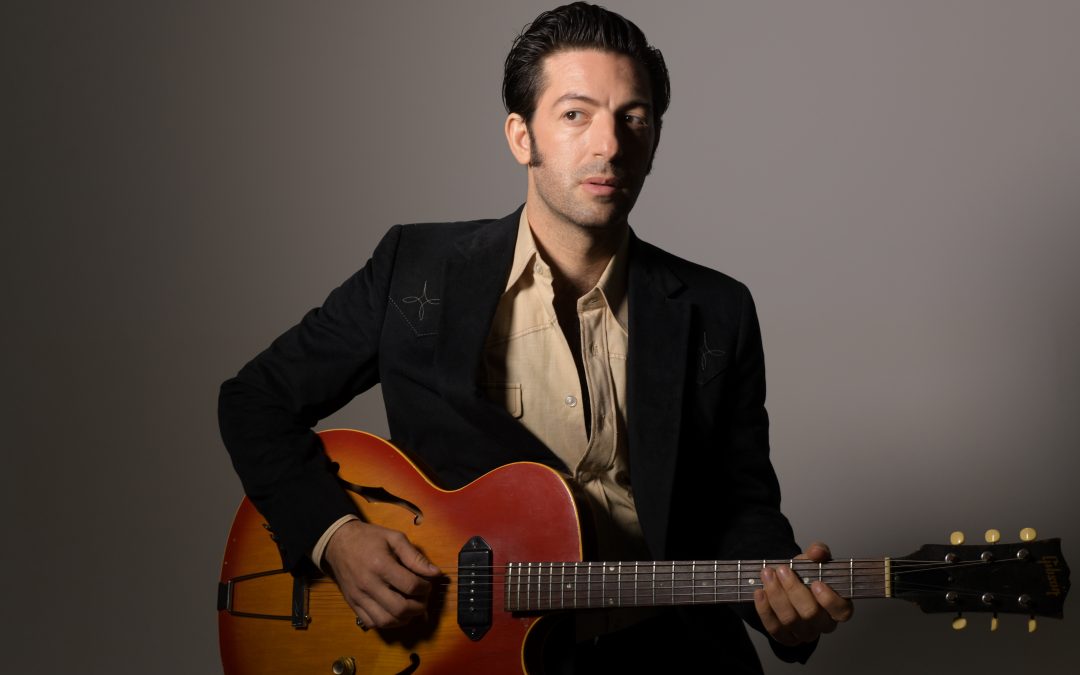
Meet Seth Kessel, the rising rockabilly artist we’ve been craving since the dawn of icons like Elvis Presley, Johnny Cash, and Roy Orbison. Kessel marries a modern sound with this nostalgia for yesteryear. Having been a band member, producer, and studio engineer, he is a true musical veteran, and now he’s started his own band. Kessel just dropped his latest album, “Ride on Through”. Leading up to his record release with Gotham Easy at Berlin on July 17th, we had a chat with him about his career, inspiration, and everything in between.
Join Seth Kessel and Gotham Easy on July 17th at 9 pm at Berlin on 25 Avenue A, NYC 10009.
Downtown: Who/What are some of your major musical influences? Seth Kessel: Some of my influences include Chuck Berry, The Misfits, Johnny Cash, and Tom Petty. I’m also really attracted to artists from various genres that have a “rawness” to them.
DT: This isn’t your first rodeo with music. You’ve been in the industry for a while, as a band member, a producer, and a studio engineer. What made you move toward being a solo artist? SK: It wasn’t really a conscious decision, I’ve always written songs, and starting my band was just something I sort of gravitated towards that felt right.
DT: Through listening to your music, it is clear that there is this sense of nostalgia for classic, rockabilly style music. What made you want to put more of this vibe back out into the world? SK: I’ve been heavily influenced by a lot of the original purveyors of rock and roll and it filtered through these songs. With that being said, these songs have one foot in the present time lyrically and emotionally.
DT: What sets your album, “Ride on Through” apart from other work that you’ve done before? SK: “Ride on Through” is the most legitimate record I’ve made so far in my career. I’m a control freak and had never felt comfortable giving so much freedom to someone else working on my songs. My producer Steve LaRosa, made this record cohesive.
DT: We love that you’re a Brooklyn native. Has your birthplace saved as a vessel of inspiration for you? SK: I believe everyone’s hometown influences them whether they realize it or not. Being in Brooklyn, I was able to have the freedom to attend Punk shows and be exposed to many environments that most people who don’t grow up in New York aren’t.
DT: What do you love most about NYC? Where is your favorite spot to perform? SK: What I love most about NYC is the people. You never know who you’re gonna meet and NYC has all walks of life here. My favorite spot to perform would be Skinny Dennis in Williamsburg.
DT: If you could travel back in time, and perform with an idol of yours, who would it be? SK: Bad Brains. I think they’re the greatest band of all time.
Join Kessel and Gotham Easy on July 17th at 9 pm at Berlin on 25 Avenue A, NYC 10009.
Residents of Battery Park City and their community were not having it: Governor Cuomo was not going to take away their green space. Cuomo wants the Essential Workers Monument up by Labor Day 2021, and we’re all for a memorial celebrating those who put their lives on the line during the pandemic. But there must be a process that includes the community — is this too much to ask for?
All they were asking for was to be included in the decision, planning, and process.
Many of those who spent the night outside and braved the hot sun fighting for their rights to be heard are actually the doctors, nurses, police, and essential workers among business leaders who live and work right here in our beloved downtown.
Within hours of hearing about the bulldozers, opponents started a Change.org online petition that was signed by 5,000 individuals and counting. Busy parents and people of the area camped out in the park for days on end, and like The Lorax, “we speak for the trees” was just one phrase plastered on posters hugging the trees. In just four days, their pleas were answered- to a degree.
Many people were surprised this neighborhood came together on this issue so quickly.
“But the moms in the community were not surprised at all. Our community is extremely unified and tight-nit— almost like a small village. We all truly care about one another. We already had multiple WhatsApp groups, connecting hundreds of neighbors. We also had almost 1000 members in our BPC Parents Association Facebook group (I founded it with some friends 5 years ago.)
These platforms have been mostly used to exchange advice, give away hand-me-downs, or report a lost shoe. So when the news got out about Rockefeller Park being at risk, we were able to mobilize very quickly by using the existing platforms we had already been using for years.
The Parents Association has now morphed into the more formalized BPCNA (BPC Neighborhood Association) and will now have a seat at the table with the BPCA (BPC Authority). The DNA of the group was formed by bonds between neighbors who respect each other and interact in a considerate, caring way. We plan to keep that style, even if the new direction moves towards political causes. “Laurie Sheindlin
“This is a Political Unicorn,” exclaimed Greg Sheindlin on the green grass under the trees at Rockefeller Park. Just days before, bulldozers showed up unannounced at that very park, ready to upheave the grass and replace it with a concrete monument honoring NYC’s essential workers.
The green space is well-loved by the people of the community, occupied by playing children, book readers, bike riders, birds, pets, and everything in between.
In protest, the people spoke out — and to think, it all started over social media. What started as a group of parents over WhatsApp turned into a herd of people that caught wind of the project. In under 24 hours, an alliance was formed against Governor Cuomo’s plan to pour concrete over grass and overturn trees.
Those whose children were raised in this area are today grown-ups themselves that still came out to fight, like Mary and Kelly McGowan, 30-year residents. They know the fight down here all too well, as they too had to fight for important issues when their children were small. “The great thing about this protest is that everyone was calm and no voices were raised: it was done with facts and from the hearts of the families and children who live and love this area. We had a mission and we were not going to give up.”
Social media gets a bad wrap, but when it’s used properly, there’s nothing like it. “Today, it’s different: at the click of a finger you can send one message to an entire community, and for that matter, around the world. When my daughter was growing up we had to rely on telephones and in-person meetings, but not today,” described Grace A. Capobianco
One politician stood out as he chanted and rallied with the parents and children. Christopher Marte was there from day one, and just happen to win his seat for District 1 Council. Other leaders still showed up after the fight was over. “We’re elected by the people and we should serve the people. If people knew how valuable this space was to parents, kids, to the little league, soccer, baseball leagues out here, this wouldn’t have even been thought of as a space that was going to be turned from green to concrete,” emphasized Christopher Marte
Tammy Meltzer, Chair Community Board 1, was at the protest and rally and fighting every step of the way at the meetings. “To lose any of the quality of space that is part of this green space is really unfair to people,” she noted.
Meltzer’s teen daughter added, “we grew up in Battery Park City: this is our home and going to other places, it’s not like this — this is one of the only places that has so much green open space. Everywhere you go it’s used extensively by all kinds of people, which is something really beautiful that you don’t get everywhere.”
It was unanimous to all parents, grandparents, and those without children that while the community of New York City and Rockefeller Park would love to honor the heroes of the COVID-19 pandemic, they would like to honor it without losing the city’s already limited greenspace.
As of today July 12, 2021, the fight continues, and all residents want is a seat at the table to have their voices heard.
There is a rally today at 4 PM Irish Hunger Memorial.
It was a cloudy summer afternoon. I was home alone, surfing the television, in need of an uplifting movie to watch. After a few minutes too long of no luck, I resorted to a scroll on Instagram. The first post that popped up was one by Netflix, promoting a new film, “2 Hearts”. The main character in the teaser was recognizable: it was Jacob Elordi, the rising star from HBO’s “Euphoria”, and Netflix’s “The Kissing Booth”.
Without hesitation, I queued up the film, given zero context of the plot. “This seems like a simple, light romantic comedy for my relaxed Sunday,” I thought. Two hours later, I was uncontrollably sobbing, irreparably moved by this less-than-simple film. Two days later, I jumped on my email to get in touch with anyone I could that was a part of it. Two weeks later, I heard back from three important men. I sat down to begin writing this story. I felt as though it needed to be spread.
2 Hearts, 2 Intertwined Lives
Jorge Bacardi was born on April 6, 1944, with primary ciliary dyskinesia, a debilitating lung disease. He was also born into his family’s business: Bacardi rum, which produced spirits for 150 years. Jorge met Leslie Bacardi when she was a Pan Am air hostess. They later married. By the age of 64, Jorge’s life was slipping from his fingers. He was in need of a new set of lungs.
Christopher Mark Gregory was born on December 13, 1988. He was raised in Maryland, with his two older brothers, and his mother and father, Eric and Grace. Chris attended Loyola University in New Orleans, where he completed his first and only semester of college. In the middle of his second, Chris suffered a ruptured brain aneurysm. He was later pronounced braindead.
The real Chris Gregory
On March 27, 2008, Jorge and Leslie received a phone call. There was a match found. Jorge would receive Chris’s lungs. Under 24 hours after the transplant, Jorge was walking around the hospital, without a breathing tube. The nurses dubbed him “Superman”.
Soon after his lung transplant, Jorge and Leslie Bacardi gave funds to Mayo Clinic and founded Gabriel House of Care, a nonprofit hospitality house for families awaiting an organ donation. Gabriel was the pseudonym the Bacardis used for Chris until they learned his real name.
What Could Have Been
2 Hearts follows two true love stories that lasted a lifetime. One of Jorge and Leslie, and that of Chris and his college girlfriend, who is referred to as Sam in the film. The plot fantasizes about what Chris’s life might have looked like if he had lived on. But unfortunately, it stops short and continues on in another body. In Jorge’s, and in the other six other recipients of Chris’s organs.
The Story Heard ‘Round The World
After speaking with Robin Russin, the co-writer, the director, Lance Hool, and Chris Gregory’s father, Eric Gregory, it became very clear to me that I was not the only one who was so touched by the film. Each three of these men remarked on how people from all over the world reached out to them individually, sharing how moved they were by the story.
The story is a kismet entanglement of and stunning example of right place right time. Not only in the plot of the film, but in the way that all of the puzzle pieces came together to bring the project to fruition.
Robin Russin
Robin Russin
Robin Russin was the co-writer on “2 Hearts”. He is a screenwriter, playwright, and director. He studied at Harvard, Oxford, The Rhode Island School of Design, and UCLA. He is currently a professor at UC Riverside. He was approached by Lance Hool to work on this story.
Marley Gifford: How did you first hear about Chris Gregory’s story?
Robin Russin: Lance Hool approached me about it after his brother Conrad met Jorge Bacardi while on vacation and learned of the lung transplant and how he and the Gregorys got to know each other. I’d worked with Lance on several other projects, and he thought I had the right sensibility for this story. As it progressed, Veronica Hool brought in the idea of exploring the life Chris might have had, but never got the chance to.
MG: What moved you to want to be a part of the film, “2 Hearts”?
RR: I loved this story from the start because it was so moving, both sad and yet uplifting—how out of an unimaginable tragedy, a new friendship emerged. More than that—it was as if through this shared trauma these two families became one, and truly came to love each other.
MG: What sets it apart from other films in its genre right now?
RR: I think, as mentioned, it is different because — other than the fantasy sequence of the life Chris might have had — it is based on the generosity, courage, and decency of these real people. I really fell in love with these people myself.
MG: Did the actors in the film, like Jacob Elordi (Chris) and Adan Canto (Jorge), bring to life what you had co-written in the way you had imagined?
Yes, absolutely— they felt so real and so appropriate to the characters they were portraying. I also want to give a shout-out to Tahmoh Penikett, who perfectly embodied Eric, Chris’s father. But they were all great, and all so on-target with their representations.
MG: This must have been a big success for you, to have a film that you have co-written debut on Netflix? What was that like?
RR: A bit surreal, to tell the truth. I’ve been working in the film business for a long time, but often on projects that never got this kind of response. I’m hearing from people around the world, how moved and inspired they were by the film. I really owe Lance a great debt of gratitude for believing in me and involving me in the film.
MG: What message do you want viewers to take away from the “2 Hearts” film? What lessons did you learn through your journey with the film?
RR: I want people to come away from the film with the feeling that life is short, precious, and unpredictable— but that through love and sacrifice, life can achieve [greater] meaning and purpose than anyone could imagine. I want people to realize that even in death, a gift of life can be given to others, and that grief can be transformed into love.
Lance Hool
Lance Hool directed “2 Hearts”. He has also worked as a writer, executive producer, distribution company chairman, studio chief, and actor. He has produced over twenty-five major motion pictures. Two of which have reached number one at the US box office; “Missing in Action” and “Man on Fire”.
MG: How did you first hear about Chris Gregory’s story?
Lance Hool: My brother Conrad met and befriended one of the couples. He told me their story and asked if I saw a movie in it.
MG: What moved you to want to direct “2 Hearts”?
LH: My first impulse was: this is a great story but a very, very tough movie to make. How do we tell the story of two couples that are so far apart in age and in time? And how do we keep the mystery going of how they get together through a whole 100-minute film? I told him: “This is not in our wheelhouse.” “Man on Fire”, “Missing in Action”, those movies were. And if it was a comedy, “Pure Luck” and “Crocodile Dundee”. But this one was something that I’d been looking for for a long time, which was a story that was really deep in the human aspect of our lives. And so he convinced me, “You can make a great movie out of this story.” And so I jumped into it. Fully dressed, into the swimming pool. I was looking for a human story that was real.
MG: What sets “2 Hearts” apart from other films in its genre right now?
LH: It is a film that relies entirely on human relationships. There are no bad guys, no guns, it is based on pure love.
MG: What was it like working with the actors in the film, like Jacob Elordi and Adan Canto? Did they bring to life your vision for 2 Hearts?
LH: Because it is such a unique story, I always felt that I needed to have actors that weren’t known. You have to get so involved with the character as an audience, the worst thing is to say, “Oh look, there’s Tom Cruise playing a doctor” or whatever. You just can’t get divorced from that for a while, so you’re out of the story. I wanted to capture every character so that the audience could easily identify with [it] immediately. So it was a six-month period of casting, in which we interviewed hundreds of people.
I had an extremely set vision that I saw throughout the film. The first character I cast was the only “known” actor, Radha Mitchell, whom I had worked with in”Man On Fire”. She is a terrific actress who I knew would immediately create a base for all the actors. Jacob Elordi was very green and took a lot of work but was a pleasure to be around, and Adan Canto is a revelation. A tremendous actor and [a] great human being. The other actress with a huge future is Tiera. I worked with a great cast and they performed beautifully. The screenplay is exceptional.
MG: Congratulations on 2 Hearts Reaching Top 10 in the U.S. on Netflix! That must be a gratifying feeling, is it?
LH: It hit number one. We are all thrilled at the millions of people who have seen the film and love it. It is very gratifying.
MG: What message do you want viewers to take away from the “2 Hearts” film? What lessons did you learn through your journey with the film?
LH: Take every moment of your life as it could be your last. Leave a legacy. Remember always that you can’t take it with you and do your absolute best to do good and love.
Eric Gregory
Eric Gregory
Eric Gregory is the father of the late Chris Gregory. Less than four years after the death of his son, he wrote “All My Tomorrows: A Story of Tragedy, Transplant, and Hope.” In 2014, Jorge Bacardi met Conrad Hool, Lance’s brother and eventual producer of the film. From there, the manuscript was turned into “2 Hearts”. Eric carries on the legacy of his son through this story.
MG: What compelled you to open your heart and write your son’s story, “All My Tomorrows”, years after the passing of your son, Chris?
Eric Gregory: The project actually began in February 2012, less than four years after Christopher’s death. By then, we had become close friends with Jorge and Leslie Bacardi and met most of the other four recipients of Christopher’s organs. In the back of my mind, there was always the biological clock; that they might not survive long enough to see this project’s completion. It took me five years to finally get it into print.
Beginning with Jorge and Leslie, among the first questions I asked each of these unique individuals (when we met) was “where were you when you got the call” that an organ was available for them? In Jorge’s case, he received two calls in the same evening, an extremely rare event. But as they each told us of the incredible events surrounding their transplants I started to overlay their experiences with our own. For instance, Nic was sent home (to die) after his failed angiogram about the same time that the second neurological exam confirmed Chris was truly brain-dead. Jorge was waking up from surgery about the time we were cleaning out Chris’ dorm room.
It seemed to me that everyone’s stories were intertwined and really interdependent upon each other. That’s when I thought it was a story that deserved to be told and I tried to convey this when I constructed the narrative of the book.
I really felt like I owed it to Chris to tell his story. I just hoped that I had the perseverance and writing skills to pull it off. I wanted to celebrate my son’s too-short life, promote the cause of organ donation and maybe offer some hope to other grieving parents since this was their story as much as mine.
MG: When did you first learn that your story was going to become a movie? What was that experience like?
EG: I believe in 2014 Jorge Bacardi called me and said that he had met a movie producer while on a cruise ship in the Pacific. The producer was Conrad Hool (Man on Fire), Lance’s brother. During their conversation, Conrad learned of Jorge’s transplant, about Chris, and about the friendship that was developing between the Bacardis and us. Basically, I was in disbelief. Jorge said, “I told him he needs to talk to you because you’re writing a book about it.”
Grace and I went to Santa Fe and met Conrad and discovered how serious he was. So I told Conrad that whenever I had a manuscript completed I would share it with him.
I can tell you that the research and writing process was an emotional roller-coaster and not the cathartic experience people assume it to be. There were many, many moments when I said, “I just can’t do this.” And then I’d get a call from Jorge, “Hey Boss. How’s that book coming? Conrad wants to know when he might get to read it.” And I’d throw myself back into the project.
I assure you thirteen years ago we never imagined talking about books or movies or any of this in the present context. It is very bittersweet and it isn’t lost on us that most donor families do not share this kind of experience.
MG: When did you watch “2 Hearts” for the first time? Were you with your family? Were you emotional when you watched the film for the first time?
EG: We saw it for the first time at a screening in Los Angeles. The Bacardis were there with some of their family and friends. Grace and I flew out from our home in Arizona. I was stunned by how well Jacob Elordi captured Christopher’s mannerisms and spirit.
I have seen the movie six times. I get emotional every time because, while some creative license was taken, the movie is still very true to the real story. So much of the dialogue comes from actual conversations and situations. I have heard from people who were actually there (at the hospital) saying that it is difficult to watch.
Lance told me after the screening, “Thank you for trusting us with your son’s story.” I have never regretted doing so. The Hool family always took care to treat Christopher with respect and to portray the subject of organ transplantation accurately. That meant a lot to us. It was the same meeting the cast and crew. They seemed genuinely invested in the story.
MG: I love the sentiment behind the letters that Jorge sent you and your family, and how he said he was “with Chris” when he was doing something like going fishing. What does that mean to you?
EG: I should mention that Jorge passed away in September but we remain close to his family, especially Leslie. I loved getting those letters and we still love hearing from Leslie or any of their family. They are always special. Those first letters were what stopped our downward spiral and let us know that we could survive the loss of our son.
We were told by the organ procurement agency that we shouldn’t expect to hear from anyone for years maybe. And even then we shouldn’t expect too much. But those first letters and e-mails, Leslie calls them the “love letters,” did more to help us heal than I can describe.
MG: It is clear that Chris’s story has made an impact, and will continue to now that this film is getting out there more. How does that make you feel?
EG: Grateful. Humble. I am getting e-mails from people I’ve not met saying how much Christopher’s story has touched them. It means his life hasn’t really ended and that his love remains very much in this world. Especially when folks tell us that they signed up as an organ donor. That’s why your interview is so important. Most people register to be organ donors at their local motor vehicle administration office. But because New York has so few drivers compared to the rest of the country, they have a smaller donor base but a greater need for organ donors.
While the movie features Chris, it is about donors everywhere. They’re all so young and they die so suddenly. Justin Harrison was only fifteen. Tim Susco was twenty-four. Dru Mayon was ten. Their deaths were unexpected and they left behind holes in their families that can never be filled. Their parents didn’t get to plan their weddings. They had to plan their funerals instead. But somebody else lived because those kids died and that has to count for something. They didn’t die for [no reason]. I think the movie makes that point.
You know each of us has a story and we tell our story in the way we live our life. Well, Chris never got to finish his story. So I tried to tell his story through the medium of print. And now Lance and Robin and the cast and crew have told his story through the medium of film. And that means his story will be told forever because cinema is art and art doesn’t die. The craft of storytelling is powerful and compelling and permanent.
MG: What do you think Chris would say about having his story shared with the world right now?
He wouldn’t say anything. He would just get a wry grin on his face that meant he knew something the rest of us didn’t.
The Importance of Organ Donation Specifically in New York
Chris’s father imparted to me the need for organ donation in the state of New York; a region in which there are fewer drivers than in other states, meaning less opportunity for organ donors, in a state in dire need of organs. If you reside in New York, or anywhere else, consider checking the organ donor box the next time you can. Any opportunity to save a life is one worth taking.
Visit organdonor.gov to make the choice that could save a life, or seven, just like Chris.
This week, we had the pleasure of visiting the brand new Bayberry Garden – the “big sister” to Providence’s Bayberry Beer Hall.
Located in Providence, Rhode Island’s innovation district at 225 Dyer Street, Bayberry Garden is a sight to see. I was welcomed warmly into the modern, yet classic New England-inspired location, complete with plant life, all of it enveloping its guests.
The restaurant is lovingly owned by husband and wife team Tom and Natalie Dennen. The name Bayberry Garden was inspired by Tom’s grandfather’s home in Maine, which was surrounded by Bayberry bushes.
Bayberry’s Growing Garden
Bayberry Garden, Providence, RI
Bayberry Garden itself is, quite literally, a garden. All of the vegetation and plant life in the restaurant is not only real but is starting small. As the restaurant grows and evolves, so will the plants within it. Three trees that face the streets of Providence are planted six feet under the cement floor of the restaurant. There’s an ivy wall at the rear of the restaurant that is now only a few inches from the ground but will climb up the wall as the restaurant ages. Hanging plants around the restaurant will overflow and turn the restaurant into more of a garden than it already is.
Bayberry Garden has an organic vibe and feel, and the wine list is a perfect jumping-off point. The selection is biodynamic, meaning there is no intervention with pesticides, and all selections are uber-organic.
Mike Seely is the executive chef and also worked under an esteemed James Beard Award winner, a high mark in the culinary universe. His dishes blew us away on a granular level.
Oysters and Breads n’ Spreads
Oysters on the half shellArtisanal bread and spreads. From left: herb pain au lait, farmhouse multigrain sourdough, semolina and cheddar sourdough, salt, and pepper butter, caramelized shallot, and fennel jam, and chive butter.
The meal began with oysters on the half shell, a New England restaurant hallmark and necessity. The selection of oysters that evening were from Chebooktook, Canada, and East Beach, Rhode Island. They were accompanied by a delicious in-house preserved lemon mignonette with homemade rice wine vinegar and a homemade hot sauce. We then received a refined take on the breadbasket with a plate of herb pain au lait, farmhouse multigrain sourdough, semolina, and cheddar sourdough, and on the side was salt and pepper butter, caramelized shallot and fennel jam, and chive butter. Unlike predictable restaurant bread and butter, it was quite the treat.
Marbled Avocado
“Marbled Avocado”
Our next course was the “Marbled Avocado”, which was served with Allen Farms pea greens, preserved lemon, and crispy rice paper. Think guac and chips, but elevated. The avocado was creamy and nutty and paired perfectly with the zesty, crispy rice paper. Additionally, it is a great option for those with gluten intolerance, like myself.
Rhode Island Striper
Rhode Island striped bass with pea chutney
The next course turned out to be my personal favorite; as it should be since I am a Rhode Island native. It was a Rhode Island striped bass with a pistachio crust, spring parsnips, and pea-chutney. The dish was warm, sweet yet savory, and oh so comforting. Additionally, the pistachio-crusted fish paired perfectly with the rounded flavor of the peas and finished out with a delightfully subtle sweet flavor. It was both exquisitely refreshing and warming.
Half Chicken with Farm Roots and Spuds
Half chicken with roots and potatoes
After the striper came the half chicken with Little City Farm roots and potatoes with morel cream and greens. The chicken was wonderfully juicy and flavorful and was married so well with the crispy spuds. They did a classic dish justice here.
Dark Chocolate Profiteroles and Rhubarb Pavlova
Dark chocolate profiterolesRhubarb pavlova
Naturally, we couldn’t leave Bayberry Garden without dessert. These dishes were undoubtedly the stars of the show. My guest, a Rhode Island restaurant industry veteran, ordered dark chocolate profiteroles with strawberries, strawberry sorbet, ricotta, and balsamic glaze. The innovative flavors were fused into the beautiful creation. My guest was left speechless, which is not an easy feat. Last but not least, my dessert of choice was a rhubarb pavlova with green strawberries, white chocolate, and lemon verbena + juniper ice cream. This was my first time having pavlova. Previously, I had only seen iterations of it on The Great British Baking Show, and it left me quite starstruck. The entirely gluten-free dish was crispy, pillow-soft, creamy, sweet, and complex. Every layer of flavor was able to shine. It was lovely.
Tea and Pâte de Fruit
Chamomile “Sunday Morning” tea and mixed berry pâte de fruit
As our night came to an end, we were served a “Sunday Morning” tea, from a list of teas that are almost presented as if they’re cocktails. They come from Amber Jackson, who founded The Black Leaf Tea + Culture Shop with the love of tea and Black culture in mind. Moreover, she started the company after recognizing the absence of space for young Black professionals in Providence. “Sunday Morning” was the perfect way to ease into the night. It featured chamomile tea, orange peel, lemongrass, and spearmint, and was served in a small glass French press, so all of the ingredients were visibly present, adding to the experience.
The night concluded with the sweetest touch, two mixed berries Pâte de Fruit, a personal favorite confection of mine. Also, they were rolled in basil sugar crystals, which kicked up the classic French sweet-Bayberry style.
I should also mention that the service at Bayberry Garden was impeccable. Our server, Danny, was very knowledgeable about the menu, beverage selections, and wine. His quirkiness was infectious, particularly when telling backstories about the decor or when highlighting a house-made ingredient. Additionally, all staff members were extremely warm and friendly, to the point that the table maintenance was done effortlessly. At Bayberry Garden, you’re treated not only as a guest but as a friend. The sentiment behind the restaurant’s conception feels rich with intention, purpose, and storytelling, just like old New England folklore.
Thank you, Bayberry Garden, for having me! I won’t be a stranger.
June 21st was Global Make Music Day, and in celebration, Steinway and Sons put on a special performance from several world-class artists, including British-Korean composer-pianist, Hyung-ki Joo. The show took place in The World Trade Center’s Oculus. Joo premiered his “Chandeliers”, a hauntingly evocative piece written in memoriam of 9/11, at the site at which the tragic event occurred. The premiere also marked the triumphant return of live music in New York City, coming out of the dark times of the last year and a half. We spoke to Hyung-ki as well as Ron Losby, the esteemed CEO of Steinway & Son’s for a Downtown Q&A.
Hyung-ki Joo
Downtown: What does global music day mean to you?
Hyung-ki Joo: Ideally, we should be celebrating music every day, all over the world. Music needs to be more respected and treasured.Since the start of the “Corona-era,” I feel as though Art and Music have been disrespected and devalued. Even before Corona hit, far too many places in the world, including the affluent Western World, had no educational classes for music in schools.I believe that music should be a part of every child’s life and I don’t say this because I’m a musician. There are plenty of studies that show how important music is for brain growth, cognitive skills, social and developmental skills.Music is one of the very few things that bind us as a human race. In a band, or an orchestra, you can have players of all colors, nations, and creeds, and despite their backgrounds, they can make good music together. I believe that musical literacy should be a human right, and as Nietzsche said, “Without music, life would be meaningless.”
DT: Playing your song at the memorial campus for 911 must-have evoked a profound feeling. Would you share any of how you felt with our readers?
HJ: I never imagined that “Chandeliers” would be performed at The World Trade Center, the site that inspired the piece. To see something new and positive existing in the place where so much devastation took place in 2001 is a testament to the New Yorkers and the many others who suffered on that horrible day. To me, the new World Trade Center signifies hope and light.
DT: You wrote this beautiful piece to honor the memory of 911. How did this come about, and how long did it take you to write it?
HJ: 2001 was a year of immense change throughout the world as well as for me. After 9/11, everything changed. I was living in New York at the time and one of the things that struck me most profoundly was, despite the darkness that was towering over us all, light prevailed. I remember vigils and ceremonies aglow with candlelight and lanterns. There was a genuine spirit of solidarity that was touching to witness and experience; especially in a city where aggression and apathyare normalized. I pictured swirling chandeliers hanging from the skyscrapers and thus I began to write this musical sonnet for piano: Chandeliers.
DT: Where were you on 911 and how did you learn about this tragedy?
HJ: I was living in New York at the time. Everyone was glued to TV sets- it was impossible to miss.
DT: What was it like having your music played in our stunning Oculus?
HJ: I was honored that my new book of 10 piano pieces, under the album title, “Chandeliers”, was given a World Premiere at the Oculus. The premiere was given by 8 pianists from my Alma Mater, The Manhattan School of Music.
The “Earth Room” is also a unique place I quite enjoy.
DT: You are not only known for your music but also your comedic zaniness, we hear that it’s infectious. Where does this come from, and do you always include this in your performance?
HJ: Victor Borge said that “Laughter is the shortest distance between two people.” Classical concerts alienate audiences because the atmosphere is too elitist and intimidating. Concert Halls, presenters, and Orchestras need to find a new way to connect to today’s generation or the halls will be empty soon. It is 2021, and we are playing music that was created between 1700 and 1950. Laughter is healing, and it helps to put people at ease. I don’t always include “comedic zaniness” in every performance I do, but it is important to make the audience feel at ease and welcomed. In the time of Liszt and Schubert, there was no divide between the artist and the audience, and it is a shame we have lost this tradition. Composers like Mozart, Rossini, Haydn, Prokofiev, and many others, did not put on a comedy hat, and then put on a serious hat. Humor and Non-Humor [were] just two sides of the same coin, and those composers didn’t take their craft less seriously when they were writing humorous music. I always found that classical musicians do not take the humor in music seriously enough! When I started my duo with Aleksey Igudesman, we simply wanted to make concerts that we would want to go to ourselves. And to have the element of surprise back when we go to concerts, I think that everyone should produce concerts that they would like to attend themselves. Just think of the variety and fun we all will have!
Downtown:How did Steinway become involved in this concert at Oculus?
Ron Losby: I heard about the event from Hyung-ki Joo, who is a Steinway Artist and a good friend. “Make Music Day” is obviously something that Steinway & Sons wholeheartedly supports, with such a noble goal of spreading the beauty and power of music to everyone. Upon hearing of the event, I let Hyung-ki know that we could support their piano needs for the event – and assist in any way needed.
DT:Steinway has had a stellar reputation since it opened more than 150 years ago, tell us your secret?
RL: For Steinway & Sons, the secret has really been [the] continuous improvement of our piano and innovation. Since the early days, Steinway has innovated within its factory – always utilizing the best mix of handcraftsmanship and technology to build a piano that is always a little bit better than the one we built last year, the year before that, and so on. But we have also innovated with our product. The clearest example there is the introduction of Spirio, the world’s finest high-resolution player piano. Now, with the touch of an iPad, even non-pianists can listen to concert-level performances on demand, on an acoustic Steinway. And for the pianists out there it is, of course, still a fully playable Steinway.
DT:We have worked with many celebrities who were brand ambassadors for Steinway and Sons, how are they chosen?
RL: Steinway Artists apply to be on the roster and a very interesting thing is that they are not paid endorsers, but choose to be Steinway Artists for the love of their craft and the instrument that we provide. All Steinway Artists actually own a Steinway, which is a part of the requirement to joining our roster of talented and acclaimed pianists.
DT: What is it like to be in The Oculus as a grand performance space?
RL:The Oculus is a spectacular feat of design and engineering – creating a space that is beautiful and modern, but also very practical and usable. It has a certain look to it that is a part concert hall and part coliseum … so it seemed a very appropriate space for today’s musical performance meant to be shared with the masses.