

A visual essay exploring the lost history of pioneering women in cinema.
Introduced by Cade Callen
Text by Jane Gaines
Posters & Photo courtesy of The Dwight M. Cleveland Collection
Reprinted from DOWNTOWN Spring 2026 issue
Lost works of cinema represent a pet obsession for many and a cause célèbre for a devoted few. Some of these efforts to uncover a cinematic holy grail are patient, archaeological reconstructions using existent material from a lost film, as with the restoration of von Stroheim’s Queen Kelly (1929), screened at NYC’s Film Forum earlier this year. Queen Kelly was a legendary collaboration between powerhouse producer and starlet Gloria Swanson, Wall Street titan Joseph P. Kennedy, and director Erich von Stroheim, who film critic Richard Brody hails as ‘one of the most innovative directors in the silent film era.’ Things went sideways quickly.
After filming a little less than half of the film in chronological order and going drastically over budget, Swanson and Kennedy halted production over what they deemed “scandalous” material, including scenes set in brothels and the depiction of an African Catholic priest marrying a white couple that would never pass the Hays Code censorship standards of the day. It effectively tanked von Stroheim’s directing career, and the unfinished masterpiece became Hollywood lore. Only an abridged version of the film was released to recoup the enormous financial losses incurred by Swanson’s production company. Using von Stroheim’s surviving material, recovered unseen footage, production photography, commissioned stock footage, and a newly composed score by Eli Denson, distributor Kino Lorber, in collaboration with Milestone Films, released a closer approximation to a realized film, that, while admirable, still packs a ‘familiar sting’ of puzzling over what might have been.
Jane Gaines is a Professor of Film at Columbia University who concretizes the question of what might have been with academic precision. Her work blends media theory, feminist historiography, and film studies, which has culminated in the groundbreaking Women Film Pioneers Project: ‘a scholarly resource exploring women’s global involvement at all levels of film production during the silent film era.’ In 2018, she wrote the book, Pink Slipped: What Happened to Women in the Silent Film Industries?, which revealed that women held more positions of power in the silent film era than at any other time in American motion picture history. It further explored the lack of easy answers for why women’s contributions to early cinema were pushed under the rug for so many years. In a sense, Gaines’ research, along with Dwight Cleveland, who boasts one of the world’s largest vintage film poster & lobby card collections, ranks among those who are working not just to restore one lost film, but an entire lost history of film that has been overshadowed for decades.


Dwight M. Cleveland, Photo courtesy of Cleveland.
While there are countless vanished individual works, what we present in this DOWNTOWN exclusive is something larger: a lost modern history of women’s pioneering role in cinema. Indeed, Gloria Swanson was far from alone as a female powerhouse producer, and she was far from the first. According to Gaines, “After marrying and emigrating to the United States in 1907,” Alice Guy Blanché, often credited as one of the first women to direct a film, owned and ran her own studio, The Solax Company, opening a plant in Fort Lee, New Jersey, in 1912.” Guy Blanché’s story raises the possibility that more women were already producing and directing films in the nascent years of the motion picture industry, yet to be discovered.
By Jane Gaines:
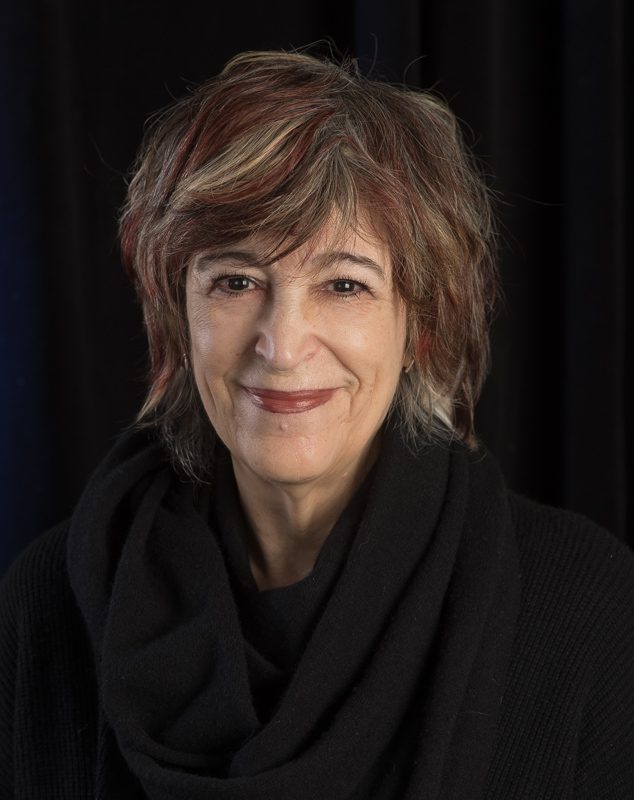
Jane Gaines
There were more women working as directors, writers, and producers in the first two decades of the American film industry, 1897 – 1927, than in any decade since! This history is not widely known in part because of the extensive loss of silent cinema: of the approximately 11,000 silent feature films produced in the United States before 1929, an estimated 75–90% are lost. But Columbia alum Dwight Cleveland’s “Remarkable Women” collection of (10,000) silent era lobby cards, a few of which are featured here, reminds us of how influential these women were. Their photographs and their names were part of the publicity – an indication of “name recognition” at the time. Here is a sample that illustrates both the stunning graphics and the women’s names appearing on each card, along with those of the stars themselves.
Manhattan Cocktail (Paramount, 1928):

Manhattan Cocktail (Paramount, 1928) Lobby Card, Courtesy of Dwight M. Cleveland Collection
This “part-talkie,” or half-sound and half-silent film, was directed by Dorothy Arzner, who was “rediscovered” when Hollywood director Frances Ford Coppola studied with her at the UCLA Film School. Second Wave feminist film scholars canonized her films. This “lost” film might best be called “death and betrayal behind the scenes on Broadway,” the message of this tragedy being “never go into show business.”
Paris at Midnight (Metropolitan Pictures, 1926):

Paris at Midnight (Metropolitan Pictures, 1926) Lobby Card, Courtesy of Dwight M. Cleveland
Screenwriter Frances Marion was the most accomplished and prolific of all the silent-era female writers. In the sound era, she received 2 academy awards for writing. The film is not lost—the Cinémathèque Française in Paris has preserved a print, as it is an adaptation of the French novelist Honoré de Balzac’s classic Le Père Goriot. Three Weeks (Goldwyn, 1924). Elinor Glyn is credited with adapting her popular “racy” novel from 1907 for this film, and her involvement in the production was highly promoted. Glyn is recalled for the “It” that actress Clara Bow epitomized. Hollywood powerhouse writer-producer June Mathis is also credited on the lobby card as Editorial Director just before her ill-fated production of Ben-Hur (1925), and Goldwyn Pictures was to become Metro-Goldwyn-Mayer.
Three Miles Out (Encore Pictures, 1924):

Three Miles Out (Encore Pictures, 1924) Lobby Card, Courtesy of Dwight M. Cleveland
Screenwriter Anita Loos had the longest career of all female writers, from 1911 to 1942. But she’s best remembered for her 1925 novel Gentlemen Prefer Blondes, which was remade in 1953 with Marilyn Monroe and Jane Russell. This “lost” title is a melodrama about a woman who marries a man who turns out to be a bootlegger and is rescued when his identity is revealed, a drama played out on a steamship en route to Rio de Janeiro. Loos is co-credited with husband John Emerson, although Loos always did all of the writing. It’s not lost; its streaming on moviefone.
A Woman of Affairs (MGM, 1928):

A Woman of Affairs (MGM, 1928) Lobby Card, Courtesy of Dwight M. Cleveland
On this Greta Garbo star vehicle, A Woman of Affairs (MGM, 1928), veteran screenwriter Bess Meredyth wrote around the Production Code’s censorship of material from Michel Arlen’s The Green Hat that included infidelity, alcoholism, VD, suicide, and unwed pregnancy. The Temptress (MGM, 1926) was one of three films Dorothy Farnum wrote for Greta Garbo, which made her one of the highest-paid screenwriters, making $2,500 per week. Although the film followed the Vicente Blasco Ibáñez novel, producer Louis B. Mayer was displeased with the unhappy ending and ordered another ending that theatre exhibitors could elect to show.
Broken Laws (Film Booking Office, 1924):

Broken Laws (Film Booking Office, 1924) Lobby Card, Courtesy of Dwight M. Cleveland
After the death of her famous actor husband, Wally Reid, actress Dorothy Davenport promoted her work as director and especially producer, headlined as “A Mrs. Wallace Reid Production.” This is one of her social issue films, developed after she spoke out about Reid’s death from drug addiction. In Broken Laws, she took on drunk driving with a story in which a mother’s nightmare that her son has killed a woman with his speeding car turns out to be a dream. Directed by Reid from a story by prolific fan magazine writer Adela Rogers St. Johns, the adaptation is credited to both Marion Jackson and Bradley King. While little is known about Jackson, King, who started as a secretary, had a long-term contract with Thomas Ince Productions, but after his mysterious death in 1924, she worked on this film as a freelancer.
Lonesome Ladies (First National, 1927):

Lonesome Ladies (First National, 1927) Lobby Card, Courtesy of Dwight M. Cleveland
Lonesome Ladies (First National, 1927). While Winnifred Dunn gets screenwriting credit for this comedy-drama, the original story is by Lenore Coffee. Dunn was first noticed when she collaborated with Mary Pickford on Sparrows (1926). In her long career, spanning the silent and sound eras, Lenore Coffee specialized in stories about women, such as Daytime Wives (1923), a domestic melodrama in which the secretary is the wife. Only 7 of the 85 films on which she is credited survive, and this one is “lost.”
The Thunderbolt (First National, 1919):

The Thunderbolt (First National, 1919) Lobby Card, Courtesy of Dwight M. Cleveland
While Katherine MacDonald is a long-forgotten actress, the existence of this lobby card for The Thunderbolt (First National, 1919) tells us something about star power in the silent era. Here, the use of “Katherine MacDonald Pictures Corporation,” her producing credit, and her starring role credit were typical. Some popular star actresses started “star name” companies and negotiated multi-picture deals as small companies within larger companies. For MacDonald, her producing credit appeared on 8 films for First National, which became Warner Brothers. Although she starred in 35 films, only 3 survive. The Thunderbolt is “lost.”
Material for this essay was drawn from the Women Film Pioneers Project at Columbia University, dedicated to researching these careers and to finding “lost” films: wfpp.columbia.edu