
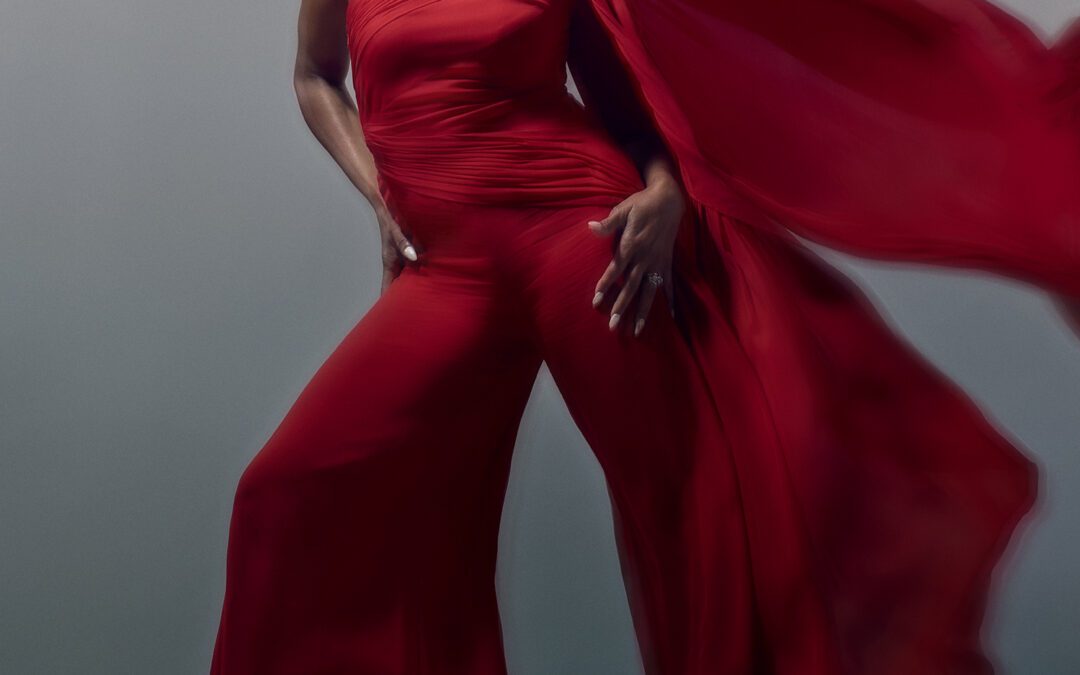
N’Kenge by Dror Forshée Photography.
DOWNTOWN’s publisher Grace A. Capobianco recently interviewed the costars from Broadway-bound That’s Love! The Dorothy Dandridge Musical-the Tony, Emmy, and Grammy-nominated five-octave vocalist N’Kenge as Dandridge, and actress Grace Field as Marilyn Monroe.
Q&A with N’Kenge
GAC: Dorothy fought for every inch of her career, from the Cotton Club to the Apollo Theater to becoming the first Black woman nominated for Best Actress, yet the industry still made her climb twice as hard. As you step into her story, do you see parallels in your own journey, and how has that shaped the strength you bring to her on stage?
Thank you so much for this important question. Dorothy’s story and her struggles in her path seems like it could be so foreign to us today but yet it’s not. My path has not been easy, but I’m very proud of that. Being able to break down walls and barriers in this business and seeing the results of success only makes me stronger. That strength and passion I bring with full honesty and authenticity when I step into her shoes on stage and I hope inspires anyone who is experiencing it from the audience prospective.
GAC: Your voice is such a defining instrument. Did you adjust your vocal style to echo Dorothy’s era, or did you choose to let your modern sound reinterpret her for today’s audience?
I try to mix the two actually. I don’t ever want to imitate Dorothy Dandridge. My goal has always been to interpret her in the best light and have her spirit inspire the narrative through my vocals. I think it’s important that I put forth my sound as I navigate her story which helps with the authenticity of truly giving her legacy the homage it needs.

N’Kenge as Dorothy Dandridge, by Dror Forshée Photography.
GAC: What surprised you most about Dorothy once you moved past the headlines and discovered the private woman behind the legend?
Wow, I discovered so many things. One of the most impressive things that moved me was uncovering the fact that she was such a loving mother to a special needs child and every decision she made in her career was centered around staying on top of medical bills so that she can have her daughter always safe at home with her was so admirable. Me being a mom myself was really moved by that.
GAC: When audiences leave the theater, what do you hope they feel, admiration, anger, hope, or something else entirely, and why?
I want the audience to laugh, cry, sing and feel a whirlwind of emotions as they watch this important story of a legend. My goal is for audiences to leave the theater feeling more empowered as human beings than they were before they walked through the doors to see the show. Dorothy’s story relates to each and everyone of us. She wanted to be seen, she wanted to be loved and she wanted to make a difference!
GAC: Dorothy carried so much at once, career pressures, public scrutiny, and motherhood. As someone who’s also built a demanding career while raising a child, do you feel a deeper emotional connection to her resilience?
Absolutely! Motherhood is not easy, but it is so rewarding. I honestly feel more empowered with everything that I do, knowing that I am literally raising and inspiring a little human being that’s about to launch like a rocket ship into the world. I myself want to leave a legacy to my daughter Jahzara Martina just as Dorothy did for her daughter Lynn.
GAC: Your Mother and father sounds like such a grounding force. Instead of trying to quiet your energy, they channeled it into piano, dance, karate, anything creative. How much of the performer you are today traces back to that early encouragement?
The foundation that my parents gave me at a young age is absolutely priceless. I am very, very lucky to have been raised by two loving parents Annette Hoffman and John Simpson Jr who only wanted the best for me. Both creative in their own way with my Dad being an visual artist and writer. Although at age 10 my parents divorced, I then had the honor to adopt a second dad Martin Hoffman who loved me like I was his very own. He was a mathematician who created math programs in Israel, Africa and India. My mother was a huge mentor to me as I watched her build a staffing firm that became regional ( Simpson Personnel) with only $75 to her name. I then worked there all through high school and college and was the Regional Operations Manager. These are the influences that I hold so very tight to my heart because when I look at their journeys, I know that anything is possible. DTM
______________________________________________________________________________________________________
Q&A with Grace Field, portraying Marilyn Monroe

Grace Field, photo by David Zaugh
GAC : From a fourth-grade classroom production of Oliver! to the lights of Broadway, when did you first realize this wasn’t just a childhood moment, but your calling?
GF My love for the arts really started when I performed Oliver in Oliver! in 4th grade! I’m grateful to have a family who encouraged my love for the arts, despite not coming from artistic backgrounds. My mom is a microbiologist, my dad is an engineer, and my grandfather is a literal rocket scientist for NASA! Growing up, I originally wanted to be a paleontologist or work in medicine—but the moment I performed in Oliver!, it changed everything for me! I remember auditioning for the role and feeling exactly how Brad Pitt in F1 described how he felt when he was completely in his element (corny I know, but so true! Haha) “It’s rare, but sometimes, there’s this moment …where everything goes quiet, my heartbeat slows, it’s peaceful, and I can see everything, and no one, no one can touch me.” For me, acting feels just like breathing, only on a higher level—a way to connect and communicate. I love it!
GAC Most portrayals of actresses, focus on the myth, the bombshell, the tragedy. Where did you consciously choose to humanize Monroe, rather than imitate her?
I think whenever I approach a role (no matter how iconic) I have to start from I always begin by connecting with the character on the most basic human level. Who are they? What do they want? What do they need? What or who’s stopping them from getting what they want? Not everyone is born a hero, a villain, or an icon—it takes years of heartbreak, triumph, and struggle to get there. Even though Marilyn was the epitome of beauty, glamour, and sparkle, she also had profoundly human moments—from everyday things like lying on the couch without makeup eating potato chips to the other end of the spectrum facing sexual exploitation and substance abuse. Capturing a fictional character is easier in a sense because you aren’t given as many physical or emotional parameters and you can explore and discover and let that character evolve on their own. Bringing a historical icon to life requires a whole other level of intense preparation. You study their movements, their voice, and make it part of you, then explore the inner workings of their mind, their history and what makes them click and so on. Once that’s all in place, you can surrender to the character and let them truly take over. At first, when I’m capturing someone who actually lived, I do have to practice a practical level of imitation. But after a while, it starts to flow more intuitively, and I can let the character take over and do what she’s going to do!
GAC Marilyn was famously disciplined and strategic about her craft, yet history often paints her as naïve. How did researching her work ethic change your perception of her intelligence as an artist?
Absolutely! Marilyn from the beginning was dismissed as a “dumb blonde”—and she was anything but! Monroe was quietly brilliant—and a lot of people underestimated her because she looked like a dream and played the “dumb blonde” on screen. She worked so hard to be the icon she became- she studied relentlessly under Lee Strasberg at the Actors studio for years and hired a private acting coach who always was coaching her on set. She was constantly working on her craft! (like we all should ) She devoured books (philosophy, poetry, psychology) and kept notebooks filled with reflections and questions. She even started her own production company in 1955 Marilyn Monroe productions which at that time was never heard of! By starting her own production company, she gained not only greater control over her salary but also the creative freedom to shape the roles she would play and bring them to life on screen.. She was always craving to be taken seriously as an actress and she was able to delve into more complex roles like her role of Cherie in Bus Stop! I know that even today, our perceptions of blondes haven’t really changed-but Marilyn took advantage of her looks and people’s perception of her being a little dull and created her own empire with it!
GAC Playing someone the world already “knows” can feel limiting. What parts of yourself had to fall away portraying Monroe, and what parts unexpectedly surfaced, while stepping into her?
You know, every role has its own journey. —some feel completely natural right away, while others take a bit more work to settle into. I always compare it to trying on different dresses (each dress is a different character). Some roles fit immediately—you put them on and just know. Others need tailoring, adjustments, and time before they truly feel right. I have to say, it was eerily easy for me to find Marilyn. It felt like the perfect fit. I instinctively understood how she stood, how she walked, how she sounded—it was effortless to slip into her. But what’s funny is that I at first felt a real resistance to playing her. It almost scares me how easily I can slip into her world—I can imagine a version of my life where I relied on others taking advantage of “assets” to get ahead instead of craft. In another lifetime, I might have taken a darker path similar to hers. And that’s a scary thought! But that isn’t who I am. To step into Marilyn, I had to release my own shyness and find a whole new unabashed sense of sensuality. She owns hers unapologetically, and that makes me uncomfortable! Marilyn also carries a profound ache to belong and an insatiable hunger for love—something I think we all share. But for her, that yearning isn’t just a trait; it’s the very heartbeat of who she is. This hunger is incredibly vulnerable but thrilling to step into. I’m naturally more reserved with my sexuality and guarded with my thoughts and emotions and I won’t pursue love and success at all costs with the fearless abandon the way Marilyn does. But how deliciously exciting to put on another person’s skin that makes you feel uncomfortable! Especially one as iconic as Marilyn!

Grace Field as Marilyn Monroe. Photo by Victor Lee.
GAC: If Marilyn could sit in the audience and watch your performance, what do you hope she’d recognize as true about herself that the world usually misses?
I think people connected—and still connect—with Marilyn because of her beauty, her profound vulnerability, and her insatiable hunger to be loved. You can feel it in every frame of her films, in every gesture, every glance, every kiss she blows to the audience. Beneath it all, there’s this quiet plea to be truly seen and loved. I would hope that if Marilyn could sit in the audience and watch me perform, she’d finally understand just how deeply she was loved—how she’s still loved—and how her iconic charisma and her luminous spirit still sparkles just as brightly, touching hearts even today!
GAC: You’ve shared the stage with performers like Hugh Jackman and Billy Porter, artists known for commanding a room with total confidence. What did performing at that level teach you about your own presence and power on stage?
Performing alongside living icons like Hugh Jackman and Billy Porter was an absolute thrill. Watching them work taught me what it truly means to own who you are with every fiber of your being—and to invite the audience along for the ride. And if it’s not for everyone? That’s okay. You don’t apologize for your light—you expand into it. You harness it. You release it.
But what struck me most is that it’s never actually about you. At its core, performance is about communication. The moment you make it about yourself; the art and the artist lose their magic. It’s not about showing how high you can sing or how beautiful you look delivering a line. It’s about connection. It’s about reaching someone, shifting something inside them, creating a shared experience. Art isn’t narcissism—it’s communion. It’s the exchange of energy, emotion, power and ultimately love between performer and audience. At its best, true art and creativity have the power to change hearts and empower both ourselves and others to make the world a better place
GAC Did you ever bust a stitch working with Whoopi Goldberg (in Disney on Broadway 25th Anniversary Special), or did you have to fight to stay in character?
Hahaha YES! Speaking of Icon! Yes, yes and yes!!! Thanks so much for having me!! And if you would like to find out more about me, visit my website gracefield.net or socials @thegracefield www.imdb.me/gracefieldy’all are awesome!!! Don’t be afraid. Shine your light yall! DTM